How to Set Up Your Trezor Model T Hardware Wallet and Keep Crypto Safe
Getting Started with Trezor Model T Hardware Wallet
I first came across the Trezor Model T back when it was still fresh out of the box. The device showed up in a hotel room - nine of them, ordered for friends - and the first thing that struck me was the packaging. Unlike the old model where opening the box basically destroyed it, this one opens and closes clean. There's even a magnetic back so you can stick it to a metal sheet on the wall. Someone in the comments compared the look to a glucometer, and honestly, that design choice was one of the main reasons the buyer picked it.
Physical Design and What Changed
The Model T came out on October 31, 2017 - nine years to the day after the Bitcoin white paper. It's the second generation, following the Trezor One. The dimensions are roughly 64 by 39 by 10 millimeters. The big visible change is a color touchscreen built right in. No physical buttons at all. The screen is described as tough, though no specific durability rating was given. It keeps everything the Trezor One did but adds the larger display, touch navigation, support for more assets, a rechargeable battery, and that new case and packaging design.
The hardware, software, and firmware are fully open source. Anyone can inspect the code and look for bugs. The firmware was completely rewritten from scratch for better security. A dated comparison listed it at $169, noting multi-coin support, open-source firmware, and a user-friendly interface as strengths, with the higher price as the main drawback.
How a Hardware Wallet Actually Works
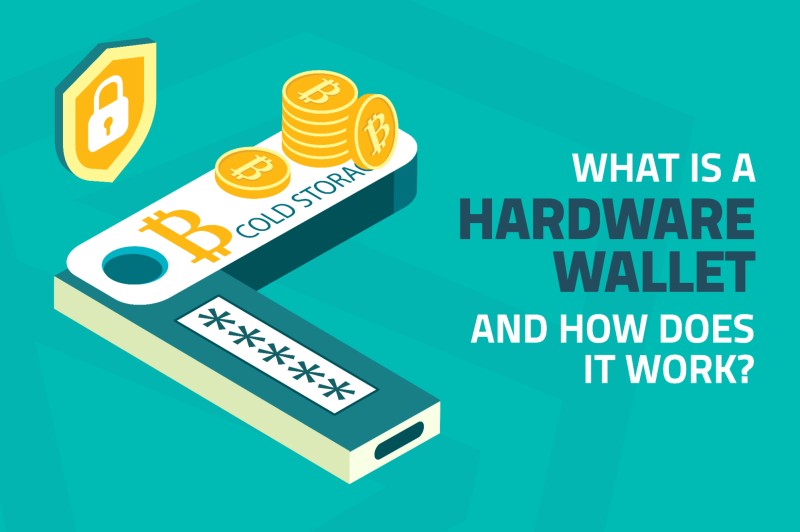
A cryptocurrency wallet doesn't physically hold Bitcoin, Ethereum, or other digital assets. Those exist as entries on their respective blockchains. A wallet holds or manages the keys and permissions used to control those entries. A hardware wallet is a physical electronic device that stores or protects private keys. Many look like USB drives, but they're effectively small computers with specialized security software.
They generate and use cryptographic keys offline, create digital signatures, and verify transaction information through a built-in display. When you initiate a transaction, the details go to the hardware wallet for review. You check the info on the device and authorize it with your PIN. The private key stays inside the wallet - never in a browser, desktop file, or ordinary software wallet.
No one can transfer Bitcoin or other coins from a hardware wallet without knowing the correct secret PIN. The coins remain recoverable if the physical wallet is lost or damaged, provided the recovery phrase is available.
Public Keys, Private Keys, and What Wallets Do
A cryptocurrency wallet normally contains a pair of cryptographic keys: a public key and a private key. The public key lets the wallet receive cryptocurrency. Anyone can send funds to a public address, and the recipient doesn't need to approve the transaction before receiving it. A public key is a large cryptographic value often represented as a wallet address. For example: BC1QJU2MQ6QYJRJVACWL5S5MDGWQLM6AJXJLN73R68. Public addresses can also be shown as QR codes. They're pseudonymous rather than tied to a legal name, but Bitcoin transaction history is public.
The private key lets the wallet send or spend cryptocurrency. It functions like a password - possession provides authority to move assets. The private key should never be shared. Giving someone a private key gives that person control of the associated cryptocurrency. Transactions are peer-to-peer, directly between blockchain wallets without a central bank or post office.
Things a cryptocurrency wallet can do
- Receive cryptocurrency from another person or wallet
- Send cryptocurrency to another wallet address
- Store or HODL cryptocurrency for longer periods
- Exchange or swap one cryptocurrency for another within the wallet
- Stake supported tokens and receive rewards
- Connect to Web3 applications and decentralized finance platforms
- Store or interact with NFTs and other blockchain-based assets
Staking lockups can range from several days to several weeks, with annual percentage yields from about 1% to as much as 20% depending on the token. Privacy coins like Monero (XMR) and DERO obscure transaction and user data, though most users may still give up some transaction privacy.
Hot Wallets, Cold Wallets, Exchange Wallets, and Self-Custody
A software wallet or hot wallet connects to the internet - mobile apps, desktop apps, browser extensions. They're convenient for frequent transactions but more exposed to hacking, phishing, malware, and theft. A hot wallet should be protected with a strong device password or biometric auth, a separate app password or PIN, two-factor authentication when available, and a securely recorded recovery phrase.
A hardware wallet or cold wallet keeps private keys offline. The physical device connects to a computer or phone only when needed. Cold wallets are more appropriate for long-term storage and larger amounts. An exchange wallet is custodial - the exchange controls your private keys. You must trust the exchange to protect funds. If the exchange fails, is hacked, freezes accounts, or becomes insolvent, you may lose some or all of your balance. FTX, Celsius, Gemini, and QuadrigaCX were given as examples of centralized platforms that failed.
The recommendation: use an exchange to buy cryptocurrency but move assets into a self-custody wallet rather than leaving them on the exchange. Self-custody means you control the private keys and are responsible for security. A non-custodial wallet may be hot or cold. No customer-support organization can recover a lost password, PIN, or recovery phrase.
Setting Up Self-Custody - A Practical Workflow
One self-custody workflow from the material goes like this: download a non-custodial wallet (Exodus was used as the example and called the preferred beginner wallet), select get started, write down the recovery or seed phrase, store it offline in a secure location, create an app PIN or password, complete onboarding, receive cryptocurrency by transferring from an exchange or another wallet, and add individual coins as needed. The wallet generates a unique address for each coin.
A private self-custody wallet doesn't ordinarily require a government-issued ID just to create the wallet. Buying crypto directly through a bank card, Visa, Apple Pay, or another payment provider may require identity verification because the payment partner follows anti-money-laundering requirements. The guide also suggested creating two separate wallet accounts: a day-to-day account for smaller, frequent transactions, and a long-term or cold-storage account for larger balances. In the example, a Trezor Model T connected to an Exodus account, and most crypto moved to that hardware-wallet account. Tokens like SOL, INJ, and POL were listed as examples that could be staked when supported.
Another suggested method of creating an additional cold-storage environment was to use a dedicated phone or laptop for cryptocurrency. The device could remain offline when not in use and stay in the owner's home.
Trezor Model T Setup and Initial Configuration
The 2018 hands-on account said the Model T arrived without software installed. It directed the user to follow included instructions and install the newest firmware. After that, you could either create a new seed or enter an existing seed to recover the wallet. The setup process includes these steps:
Model T setup steps
- Connect the Model T to a compatible computer or phone - supports Windows, Linux, Mac, and Android through USB
- Open the appropriate Trezor interface - Trezor Suite for Windows, Mac OS X, Linux, Android, ChromeOS, Firefox, or web browser access
- Follow device instructions and install the newest firmware
- Choose between creating a new wallet and recovering an existing wallet from a recovery seed
- If creating a new wallet, record the generated recovery or seed phrase - typically 12 or 24 words long
- If recovering a wallet, enter the existing recovery phrase - the touchscreen makes entering a 24-word seed convenient
- Store the recovery information offline before treating the wallet as fully backed up
- Set or use the device PIN and other available security controls
- Connect the Model T to the desired software wallet or blockchain interface
- Select the cryptocurrency or token account and confirm its public address
- Perform a test transaction with a small amount before sending a larger balance
The test transaction advice confirms the wallet and destination address work correctly before larger funds transfer. The Model T can also work with multiple software wallets, performing supported blockchain transactions without exposing the private key to each third-party wallet. A Bitcoin-only firmware version was also described - you can use the Model T for Bitcoin alone or the multi-coin version when you need supported altcoins and tokens.
Recovery Phrase Storage and Restoration
A recovery phrase, recovery seed, seed phrase, and mnemonic seed phrase are related terms for the sequence used to restore a wallet. The recovery phrase is the only way described for restoring a wallet if the device is lost, damaged, or inaccessible. If the recovery phrase and PIN are available, the wallet can be restored on another compatible hardware wallet.
Recovery phrase rules
- Write down the recovery phrase instead of relying only on a device screen
- Keep the written phrase offline
- Make two or three copies
- Store the copies in different places
- Protect copies from water, fire, theft, and accidental damage
- Do not keep the only copy in the same place as the hardware wallet
- Do not share the phrase with another person
- Do not rely on customer support to restore it
A claim in the guide said almost 20% of Bitcoin had been lost because the associated seed information was no longer available. If a hardware wallet is physically stolen, the thief still needs the PIN or recovery information. But if the thief obtains the recovery phrase, the wallet can be recreated on another device. Whoever restores a wallet with a valid phrase may be able to transfer the crypto to another wallet under their own control before the rightful owner acts.
Shamir Backup Shares on the Trezor Model T
A Shamir backup divides a recovery or seed phrase into separate shares. Instead of keeping all recovery words together, you distribute separate parts of the backup. Examples for reconstructing: any 2 of 3 shares, any 3 of 4 shares, or a 4-of-4 arrangement. The suggested arrangement: store each share in a different physical location and, for inheritance or shared custody, with different trusted people. A will or estate plan could explain how shares should be recombined and who receives access.
This is a form of multi-factor recovery because more than one independently stored part is needed to reconstruct the wallet. The threshold examples were presented as design possibilities, with 2 of 3 described as reasonable. The same discussion recommended storing at least some recovery information in an indestructible format. Crypto-steel capsules were described as an option because the phrase isn't left exposed on ordinary paper. A single photograph of one stored share should not reveal the complete recovery sequence.
Trezor Recovery-Phrase Protection Accessories
Two Trezor-related recovery protection products were described in detail. The Cryptotag Zeus is a 6-millimeter-thick titanium recovery-phrase storage device, tested at temperatures up to 1,667°C (2,962°F), and passed a pneumatic-hammer test and a 9-millimeter bullet test. The Cryptosteel cassette is a stainless-steel cassette with stainless-steel letter tiles, protecting recovery words against fire, corrosion, flooding, electrical shock, and impact from accidents. Billfodl and Steelwallet were also mentioned as metal-backup options, useful when cryptocurrency is expected to be held for years and paper could be damaged.
Trezor Model T Compared with the Trezor One
The Trezor One came from SatoshiLabs in 2014, described as the first secure Bitcoin hardware wallet. It resembles a small calculator, uses an OLED display, and connects through USB. The Model T is second-generation, retaining core functions while replacing the two-button interface with a larger color touchscreen.
Main physical and interface differences
- Trezor One: two physical buttons and an OLED screen
- Trezor Model T: no physical buttons, larger built-in color touchscreen
- Trezor One dimensions: approximately 60 by 30 by 6 mm, weight 12 grams
- Trezor Model T dimensions: approximately 64 by 39 by 10 mm
- Old Trezor package: unable to be closed again after opening
- Model T package: designed to be opened and closed repeatedly
- Model T storage: magnetic mounting feature
The Trezor One used a 24-word recovery seed and a randomly generated nine-digit PIN. It worked with Android and apps like Multibit HD, Mycelium, and Trezor Wallet. Ethereum support was available through MyEtherWallet. The older section said Trezor One supported eight cryptocurrencies, listing Bitcoin, Namecoin, Dogecoin, Dash, Bitcoin Testnet, Ethereum with ERC-20 tokens, Ethereum Classic, Zcash, and Litecoin. Listed compatibility: Linux, Mac 10.8 or later, Windows. Package included micro-USB cable, recovery seed booklet, and user manual.
Dated pricing: Trezor One at $129, Model T at $169. The Model T added a larger touchscreen, additional coin coverage, newer firmware, and a more modern interface. The Trezor One was also described as a strong altcoin wallet in its period with Bitcoin, Bitcoin Cash, Litecoin, Dogecoin, Ethereum, Ethereum Classic, Namecoin, Dash, Zcash, and ERC-20 tokens. The Model T supports more than 1,800 cryptocurrencies and can be configured for Bitcoin-only use.
Coin, Platform, and Software Compatibility
The Model T works with Windows, Linux, Mac, Android phones, ChromeOS, Firefox, and web-browser access through a compatible computer interface. Connections use USB. A 2025-era comparison said iOS and Windows Phone were not yet supported - that limitation was tied to the dated description. Trezor Suite is the main interface. The Model T can also work with third-party software wallets for supported blockchains, signing transactions while the private key stays protected inside the device.
The wallet can be used with decentralized applications and DeFi platforms. It can operate with multiple software wallets, managing supported assets through different blockchain interfaces without revealing the underlying private key. The 2018 hands-on post didn't list Steem as supported and hoped Trezor would add it. A later market comparison noted asset support can vary by model and firmware version.
Account, Password, and General Security Practices
Hardware-wallet security still depends on the security of your computer, browser, email account, software wallet, recovery phrase, and PIN. The material gave these practices:
General security practices
- Use a strong, unique password for every important account
- Do not reuse the same password across services
- Do not make small changes to an old password and treat it as new
- Protect the primary email account - password-reset links for other services may go there
- Use a password manager to generate and store passwords
- Enable two-factor authentication whenever available
- Use anti-virus software
- Use HTTPS connections
- Open official websites directly rather than following an unverified link
- Confirm a website or application is legitimate before entering credentials
- Use reputable exchanges and services with established security histories
- Do not disclose crypto balances or locations of stored assets
- Place an immediate hold on an account that reports suspicious activity
- Do not approve or validate a cryptocurrency transaction you did not initiate
- A transaction does not need to be approved merely to receive cryptocurrency
A dedicated offline computer or phone was also presented as a way to reduce exposure when not in use. Password managers were recommended for both crypto and non-crypto accounts. Bitwarden was the top pick (free plan with full functionality, $10/year premium, $3.33/month family), with 1Password ($2.99/month premium, $4.99/month family) and LastPass (free basic, $3/month premium, $4/month family) also listed.
Phishing, SIM Swaps, Investment Scams, and Rug Pulls
Phishing attempts to steal login credentials, card details, recovery phrases, or personal info by directing you to a fake website, email, text, or call. Messages often impersonate banks, exchanges, tech companies, or other legitimate organizations. Be wary of unsolicited emails and texts, avoid unexpected links and attachments, and don't enter information into a site unless independently verified.
A SIM-swap attack (port-out scam) happens when an attacker impersonates you to your mobile carrier and transfers your phone number to a SIM they control. Because many services use texts or calls for verification, a successful SIM swap can expose email, exchange, or financial accounts. Protections: ask your carrier for an account PIN or password, enable stronger carrier security, use two-factor authentication, confirm suspicious requests through an official channel, and don't approve crypto transactions you didn't initiate.
Investment scams try to persuade you to send crypto expecting unusually large returns. Be skeptical of projects that appear too good to be true. A rug pull occurs when creators promote a project, attract buyers, then withdraw funds - often after the price rises - leaving new investors with unsellable or worthless tokens. Research a cryptocurrency or NFT project before investing. Keeping holdings private was described as a security measure because public disclosure of large balances can attract thieves.
Hardware Wallet Advantages and Limitations
The listed advantages of hardware wallets:
Advantages
- Keeping private keys offline
- Protecting long-term cryptocurrency balances
- Reducing exposure to phishing, malware, and compromised desktop software
- Allowing transactions to be verified on a dedicated physical device
- Supporting daily transactions as well as long-term storage
- Providing two levels of protection through device PIN and recovery phrase
- Allowing balances to be restored after the original device is lost or damaged
- Leaving the owner in control without relying on a third-party custodian
- Relatively easy to set up and use once initial recovery process is complete
The limitations:
Limitations
- Owner must protect the recovery phrase and PIN
- Crypto cannot be restored if both recovery phrase and necessary information are lost
- No support organization can retrieve a private key or recovery phrase
- Physical theft remains a risk if both wallet and PIN are obtained
- Recovery-phrase exposure can allow someone to restore the wallet and transfer assets
- Hardware wallets cost more than paper wallets and many software wallets
- Owner bears responsibility for storage, backups, and inheritance planning
- Connecting to a compromised computer may still create interface, phishing, or transaction-verification risks
One passage framed the typical hardware-wallet price as roughly $50 to $100, while dated listings for the Trezor Model T were $169. The text argued the added security had greater value than the purchase price, particularly for long-term holdings. A technically capable person could build a hardware wallet from a USB device, but the recommendation was multiple dedicated hardware wallets and keeping the process simple.
Broader Hardware Wallet Market Context
A broad comparison page titled "Best Hardware Wallets for Bitcoin and Altcoins - 2026 Edition" with an article date of August 7, 2025, included a "New Hardware Wallets in 2025" section. Model rankings, coin lists, and prices represent a dated comparison rather than a consistently updated catalog. Quick comparison listings included several devices with varying prices and features.
Quick price and feature listings from the comparison
- Trezor Model T: $169, multiple cryptocurrencies, open-source firmware, user-friendly interface; higher price as disadvantage
- Ledger Nano S: $59 (also listed at $65), multi-coin support, ease of use, offline storage; limited storage capacity as disadvantage
- Ledger Nano X: $119, multi-coin support, ease of use, offline storage; higher price as disadvantage
- KeepKey: $49 (also listed at $79), Bitcoin, Bitcoin Cash, Ethereum, Litecoin, Dogecoin, sleek design, affordable; limited coin support as disadvantage
- CoolWallet Pro: $149, Bitcoin, Ethereum, Litecoin, ERC-20, DeFi-focused, water-resistant, durable; limited coin support
- Keystone Pro: $299, multiple cryptocurrencies, four-inch touchscreen, fingerprint sensor, high-security; limited coin support
- Secux Stone: no price given, major OS support, large touchscreen, cross-platform; support limited to major cryptocurrencies
The Ledger Stax was described as a high-end wallet for on-chain users with a touchscreen, support for more than 5,000 coins and tokens through Ledger Live, compatibility with Ethereum- and Polygon-based NFTs, two-factor authentication, secure-element chip, anti-tampering technology, secure Bluetooth, and a $279 price. The Ledger Nano X launched January 2019 at CES Las Vegas, retains USB-like form, measures 72 by 18.6 by 11.75 mm, weighs 34 grams, has a CC EAL5+ certified secure chip, built-in Bluetooth, and supports up to 100 cryptocurrency applications (though more than 1,100 supported across Ledger products). Ledger uses BOLOS, a proprietary operating system on the secure chip - described as non-open-source.
The Ledger Nano S Plus upgrades the Nano S with 1.28 MB RAM (vs 128 KB), larger screen, $79 price (described as $50 less than Nano X and less than Model T), no Bluetooth, must connect to computer to turn on. The Ledger Nano S is a battery-free USB device from France-based Ledger Wallet, two side buttons, OLED interface, one of the most popular hardware wallets. It supported nine cryptocurrencies but listed seven named assets. Package includes device, USB cable, accessories, recovery sheet, user manual. Security features: offline recovery-phrase generation, four-character PIN, tamper-evident seal.
Trezor and OneKey were described as fully open-source, allowing users and developers to inspect firmware and audit for bugs. Ledger was described as using closed-source code for key parts of its operating system and firmware.
Open Source, Mobile, Multi-Chain, and Inheritance Considerations
The newer-wallet comparison emphasized Bluetooth and NFC support for mobile users, support for thousands of tokens across major networks, specific multi-chain support for Bitcoin, Ethereum, ERC-20, Solana, Polygon, Avalanche, and other blockchains, metal backups rather than paper for long-term storage, and inheritance and social-recovery planning for long-term holders. Bitkey (backed by Block) was mentioned as introducing inheritance features, social recovery, and multisignature backup flows - ways assets could eventually pass to family or trusted parties. The Trezor Shamir backup was also presented as a recovery model relevant to inheritance because separate shares can be held in different places and recombined according to a stated threshold.
Wallet Definitions - Quick Reference
Common wallet questions answered
- What is a cryptocurrency wallet? Software or a physical device that stores or manages a public address and its corresponding private key. Can receive, send, exchange, or hold cryptocurrency. Coins remain on the blockchain.
- What is a hardware wallet? A standalone physical device that stores private keys in protected hardware. Can look and operate like a USB drive. Claimed to remain secure even with a virus-infected computer because private keys don't leave the protected device.
- Hot wallet vs hardware wallet? Hot wallet connects to the internet (mobile, desktop, browser). Convenient but more exposed to hacking. Hardware wallet keeps private keys offline, requires physical device to authorize transactions.
- What is a cold wallet? Offline or air-gapped. Paper wallets and hardware wallets are examples. Used to keep cryptocurrency safe over longer periods.
- Is a hardware wallet cold storage? Yes - uses an offline device or smart card to generate and protect private keys. A connected hardware wallet may communicate with a computer, but the private key is intended to remain isolated.
- How does a hardware wallet work? Physical device and specialized program storing private keys in a protected microcontroller area. Keys cannot ordinarily be transferred in plaintext. Device signs transactions and allows verification without exposing private key to the computer.
- What is self-custody? Owner controls private keys and funds, acts as custodian, responsible for passwords, PINs, backups, recovery. Contrast with custodial wallet managed by a third party like an exchange.
- How is a self-custody wallet created? Download a reputable non-custodial wallet app or set up a compatible hardware wallet. Setup generates public and private keys which must then be backed up.
- Are self-custody wallets safe? Can be secure when used correctly. Practices: keep private keys offline, enable two-factor authentication, use strong passwords, maintain tested backups, avoid phishing links.
- Self-custody vs custodial? Self-custody gives user full control over private keys and funds. Custodial wallets managed by third party holding keys. Self-custody removes exchange reliance but makes user responsible for recovery and security.
The dated comparison's FAQ listed the top five hardware wallets as: Ledger Nano S, Ledger Nano X, Trezor One, Trezor Model T, and KeepKey. Whether you're looking at a Ledger hardware wallet or considering the Trezor Model T , the core idea stays the same - you hold the keys, you hold the responsibility. If you're researching what is crypto ledger or comparing the Ledger Nano X crypto hardware wallet against this one, focus on what matters for your use case: open-source firmware, touchscreen workflow, coin support, and how you plan to back up your recovery phrase. For someone wanting the easiest cold wallet to use , the touchscreen here removes the button-tapping dance of older devices. And if you're just figuring out how to get a Bitcoin wallet that you actually control, this path - hardware device, offline seed, PIN-protected - is the one that puts you in the driver's seat.


Comments on “How to Set Up Your Trezor Model T Hardware Wallet and Keep Crypto Safe”
No comments yet. Be the first to share your thoughts.