
How Do I Use Crypto: From a 2% Plan to Linux APIs and a Pi Miner
How Do I Use Crypto: Cut the Hype, Keep the Plan
I keep seeing the same question from friends and readers: how do i use crypto without losing my head. The old way was all hype and wild bets. The new world needs a plan. I want to show a calmer path that mixes a small money plan, some Linux crypto APIs, and even a tiny Raspberry Pi miner.
Most people ask how do i use crypto and then get drowned in noise. So I cut the noise. A 2% plan for allocation, some code on Linux, and a fun Pi box. That is the whole idea. You do not need to be a genius to start.
When folks ask what crypto is best they often mean which one will make them rich fast. I do not answer that. I answer with a plan. A plan keeps you from breaking your own rules when prices swing.
My Investment Thesis on Crypto
My thesis has not changed much. Some smart people will figure out useful things with crypto, and I do not want my FOMO to wreck the rest of my financial plan. The first half has not panned out the way I hoped, but the second half is why I still hold a little.
If crypto went to zero, I would be upset for a bit and then move on. My portfolio return stayed above my goal. Had I sold during a run, I would have felt worse every time I saw others getting rich. Owning a little keeps the itch small.
The only thing I have been right about crypto so far is not selling at its low.
A reader once asked me which crypto has most potential and I said I do not pick winners. I just keep a small slice so I do not chase the market. That is the whole game for me.
My Crypto Allocation and Rebalancing
I use a simple split. My current asset allocation is 98% stocks in index funds and 2% crypto. The 2% spot feels like the sweet spot for taking advantage of crypto's ups and downs without adding too much risk to the rest of my life.
I rebalance stocks each year with new retirement money. With crypto, I am more active. I buy or sell when it hits 0.8x or 1.25x of the target. Gains from selling go to stocks. I buy crypto with cash from checking.
How I keep the plan visible
- I wrote the rebalancing plan down on a sheet
- My spreadsheet turns cells yellow past the limit
- Google Sheets and Excel have conditional formatting for this
- I check it during my annual financial review with my wife
Even with reminders, I am often slow to act. In a summer crash I bought small amounts because I feared more drops. When crypto passed 2.5% I hesitated to sell near a round number price. I finally sold the extra only because I started writing about it. Non-automatic investing is hard.

A common question is best new crypto to buy when the price is high. I do not do that. I buy below the line and sell above it. The plan beats the guess.
Crypto's Annualized Real Return
I tracked the real return of crypto in my portfolio. Until one year it was negative. It lowered my 2022 return by 1.05% and improved 2023 by 0.88%. From 2021 to 2023 it lowered the overall annual real return by 0.09%.
In a later year the real return on crypto was 91% even after selling some. Crypto improved the portfolio return by 1.29% that year. From 2021 to that year it improved the overall annual real return by 0.22%.
Based on our baseline projection of 5% real return for our portfolio, the improvement of 0.22% over a 30-year span would lead to an additional $2,800 for every $10,000.
I do not think those rates last forever. But the small slice did its job. It kept me from touching the 98% that does the heavy lifting. That is the point of how do i use crypto in a calm way.
Never Interrupt Compounding Unnecessarily
Crypto's boost feels like a bonus. My main reason to own it is to not interrupt compounding for the 98% part. Charlie Munger said the first rule of compounding is to never interrupt it unnecessarily. He called crypto rat poison, but I still like his rule.
I made a financial plan before I added crypto. I thought hard about why it fit. I will not tell you to buy crypto now. I do not know your plan or your risk skin. But I will say the price of Bitcoin should not be your reason. That way lies broken rules.
Some ask how you make money off crypto and they mean quick trades. I make mine by not swinging the big part of my portfolio. The little part pays me in calm.
Reader Comments and Debates on Value
The column got many replies. A reader asked if crypto is on an exchange or cold wallet. I keep mine on a well-known exchange because automatic buys mattered to me. I may move some to a wallet later if I want.
Another reader asked why sell at the high mark instead of buying more index funds. I said my exchange has no fee but a high spread. I sell crypto and buy stocks to take gains before a crash. I buy crypto with new cash when below the line because most stocks sit in tax-protected accounts.
Voices from the thread
- A neuro Bitcoin maximalist said Bitcoin is hard money like gold over time
- Jim noted crypto has no earnings, no rent, no long track record he trusts
- Dr T compared crypto to digital gold with no clear use case for him
- FloridaEDDoc said owning crypto to tame FOMO is the only good reason he heard
I do not want my FOMO to affect other aspects of my financial plan. This is probably the very best and perhaps ONLY good reason I have ever heard to own crypto.
A believer said a 98% stock 2% bitcoin mix beat the S&P over many windows. Others said crypto with highest potential is Bitcoin if you trust the long trend. I just shrug and stay the course.
Crypto for Rational Skeptics
This part is for people who have not made up their mind. One writer used a space analogy and said the crypto system is just a worse copy of regular finance. I think that misses the point. Crypto is faster, cheaper, and borderless on many real measures.
Most users do not care about ideals. They use apps because they work. The big consumer apps are centralized companies like Coinbase and Binance. Even top tokens are not all decentralized. But the base tech is built for the internet in a way old finance is not.
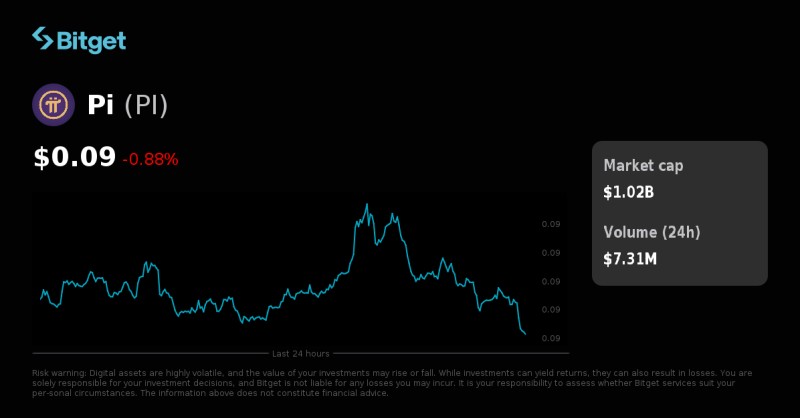
Someone asked me if pi crypto is worth anything and I said a Pi miner is a fun build, not a money plan. The value of a coin is what others pay. That is true for gold too.
Building a Crypto Miner Using Raspberry Pi
This project mines XMR on the Monero blockchain. It is a fun build, not financial advice. Monero lets you mine on CPUs, even a Raspberry Pi 4. That helps keep mining open to more people.
A blockchain is a shared list of trades. Miners lend compute to check them. Bitcoin and Ethereum miners use big rooms of gear. Monero uses proof of work but you can join a pool. A pool splits the reward by your share.
Tested hash rates on small boards
- Raspberry Pi 3: 20 H/s
- Raspberry Pi 4 with 1 GB RAM: 45 H/s
- Raspberry Pi 4 with 4 GB RAM: 99 H/s
- Nvidia Jetson Nano 2GB: 62 H/s
For the build you need a small board, SD card, power, and internet. You make a Monero wallet from getmonero.org. You use balenaCloud to flash the SD and set WiFi. Then you add your wallet address and pool to the device vars and restart.
Using a Raspberry Pi for mining is more of a fun experiment than a profitable venture. The low hash rate and high energy consumption make it impractical for real earnings.
If you wonder trades on binance versus a home miner, the miner is for learning. The exchange is for buying a plan. Both are valid if you know which is which.
Linux Kernel Crypto API for User Apps
The Linux Kernel Crypto API showed up in October 2002. It started for IPsec but user apps can use it too. Your app sends data to the kernel with a system call. Details sit in /proc/crypto.
In that file you may see ctr(aes) with three blocks: generic, aesni, and aesni async. Each has a priority. The highest priority wins when you call by name. The x86 AES steps run about twice as fast as the generic C code.
Benchmark samples with libkcapi
- AES generic CTR 128: about 149 to 159 MB/s
- AES AESNI CTR asm 128: about 310 to 343 MB/s
- AES AESNI CTR generic 128: about 155 to 172 MB/s
- x86 AES instructions beat generic C by 2x
Why use the kernel at all? Keys stay in kernel space so user apps do not see raw key material. OpenSSL had its share of bugs. A recent patch let the kernel hold keys for symmetric encryption. The trade-off is speed for safety.
In one test the kernel did about 2112 Mb/s and OpenSSL did about 3758 Mb/s. With a closer look the kernel crypto part was near 81% of OpenSSL. So you give up some speed to keep keys off the desktop.
IBM i Crypto APIs for SHA-512 Hashes
IBM i APIs look scary but are not bad. One example makes a SHA-512 hash over a source member. You include qc3cci and qusec. Then you call Qc3CreateAlgorithmContext to get a session token.
The data struct QC3D0500 has a field for the hash type. Pick 5 for SHA-512. MD5 and SHA-1 are not safe, so use at least SHA-256. Then Qc3CalculateHash takes your data and gives the hash.
Steps to hash a member
- Read the IFS file or source member with SQL ifs_read
- Loop lines and call the hash API each time
- Final call sets the flag to 1 to get the hash
- Convert binary to hex with the cvthc instruction
The author Daniel Gross says this shows IBM i crypto APIs aren't hard. A comment noted you can use Qc3CalculateHMAC for AWS. It is a plain way to add crypto to old systems without a full rewrite.
Crypto Design vs Crypto Engineering
When people do cryptography there are three kinds of work. Theory studies limits and math. Design builds primitives and protocols. Engineering makes it run safe and fast. Most folks pick one lane.
Design talks in broad terms like PRF, hash functions, and signatures. Engineering must pick real ones like HMAC and SHA2. Side channels were ignored for too long. Now leakage-resilient crypto is a real need in engineering.
Engineering must instantiate PRF with HMAC, HMAC with SHA2.
This matters for how do i use crypto because the coins you buy sit on systems built by these layers. A weak link in engineering can burn a strong design. That is why audits matter more than hype.
Private Inference and AI Agents
Apple said it would use Google Gemini with Confidential Inference and Private Cloud Compute for Siri. The compute box encrypts data from your phone to a stateless server. That is a crypto win for privacy.
But agents need context to be useful. To be useful they must talk to outside services, which can leak data. A bad mix is private data plus untrusted content plus external comms. Crypto can remove trust with "I can't" instead of "I promise not to."
One worry is that model design or prompts can still leak. The provider may not see your data, but the model logic might. That is the edge where crypto engineering still has work to do.
Encrypted Reasoning in LLM APIs
Some LLM APIs send encrypted reasoning blocks to the client as Base64. If you tamper they reject it. But replay across accounts can work because a global key is used. That is a hole.
A side channel is the size of the block. Length, token count, and time can leak bits of a secret. The provider could fix key use and add policy gates. For now, treat those blocks as opaque but not bulletproof.
Provider could improve key management and policy gates.
I mention this because crypto APIs on Linux or IBM i are tame next to live model calls. The web is messy. A plan for money is simpler than a plan for AI data.
Anonymous Credentials
Anonymous credentials let you prove who you are without linking your name across sites. An issuer gives a credential. A resource checks it. Privacy Pass is used by Cloudflare, Apple, Google, and Brave.
It uses blind RSA or oblivious MAC. Metadata can bind a credential to a site. WhatsApp uses the Signal protocol for end-to-end chat. The UK once ordered a backdoor in iCloud ADP and Apple turned it off for that region.
What anonymous creds can do
- Limit use to single or expressive sessions
- Keep your identity unlinked across sites
- Protect login flows without sharing raw ID
- Reduce ad tracking through auth steps
This is a quiet part of how do i use crypto ideas in daily life. You may never mine a coin but you touch these systems when you load a page.
Fiat-Shamir and False Statements
There is a weak spot in some proof systems. GKR15 with Fiat-Shamir can be attacked by crafting a circuit that computes the challenge hash. That lets a false proof pass under the random oracle assumption.
In practice using SHA-3 may not be safe there. It is a reminder that crypto engineering is not done when the math looks right. The glue code matters as much as the theorem.
Theoretical weakness: GKR15 succinct proof system with Fiat-Shamir can be attacked by crafting circuit that computes the challenge hash.
I like this part because it keeps me humble. A 2% plan is simple. A zero-knowledge proof is not. Both live under the same crypto roof.
High Frequency Finance Using Crypto Data and Julia
Crypto opens finance to regular people. Anyone can pull exchange order books. The CoinbasePro.jl package in Julia gets you started with high frequency ideas. You can grab the last 1000 trades for free.
In the Julia forum, one user starred the package and used it for equity books too. Another asked if Julia is fast enough for live HFT. The author said it is not faster than custom hardware but still fun to learn.
Julia crypto finance bits
- CoinbasePro.jl gets limit order book data
- IEX publishes free feeds via InvestorsExchange.jl
- Link CoinbasePro.jl to LimitOrderBook.jl for backtests
- Makie can plot live data from the feed
If you ask bit coin trade speed questions, this is the deep end. Most of us just need the 2% plan and a calm head. The fast stuff is for people who like the machine.
I also saw talk of a cryptocurrency index fund as a calm way in. If you do not want to pick coins, an index style product can fit a plan. Just size it like any other small slice.
Why a Small Slice Beats a Big Bet
The big lesson for me is that how do i use crypto is less about the coin and more about the cap. A 2% cap let me sleep in a crash and kept me from selling the 98% that builds my life.
Readers who went to 5% said they slept fine too. But 5% is the line where Jim would put believers. Past that, a zero event hurts the plan. Keep the cap and you keep the calm.
Put enough into it that it will make a meaningful difference to you if it does what its fanatics hope it will, but not so much that it will kill a reasonable financial plan if it doesn't.
So when someone says which cryptocurrency is the best I say the best one is the one you can hold without breaking your own rules. That sounds dull. Dull is the point.
Putting the Pi Miner in Context
The Pi miner is not part of my 2% plan. It is a toy that teaches how blocks get made. You will not get rich. You will learn that mining is hot, slow, and real.
If you already run a Linux box, the kernel crypto API is more useful than a Pi miner for real work. You can keep keys safe while your app does the job. The miner is for the shelf, the API is for the stack.
And if you still wonder crypto with highest potential for learning, start with the Pi and a wallet on a known exchange. Touch the tech before you trust the talk.
Final Notes on a Calm Crypto Path
I do not mix politics and investing. You shouldn't either. The price moves for many reasons. A plan that ignores the noise is the only edge I trust.
How do i use crypto comes down to three things for me: a small allocation with rules, some code study on Linux or IBM i, and a Pi miner on the side. None of it is sexy. All of it is calm.
If you take one thing, take the cap. A 2% line turned a loud market into a quiet hum for me. The rest is just detail.

Comments on “How Do I Use Crypto: From a 2% Plan to Linux APIs and a Pi Miner”
No comments yet. Be the first to share your thoughts.