A Plain Guide to Popular Crypto Coins, Altcoins, and Stablecoins
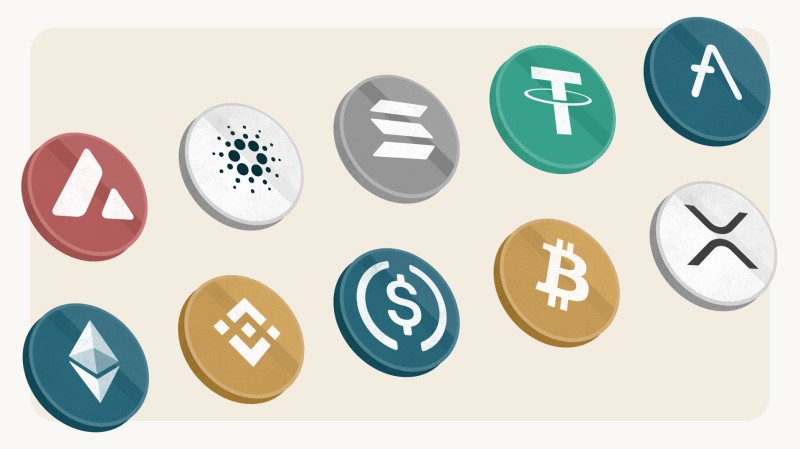
Popular Crypto Coins and How the Main Types Work
There are thousands of cryptocurrencies, and the label popular crypto coin can point to very different things. If you have ever searched what crypto is best , you probably got sales copy instead of a clear answer. There is no universal winner. One coin may be built for payments, another for smart contracts, another to hold a dollar value, and another to be a joke.
I’d sort each popular crypto coin by four things: what it does, what chain runs it, who controls it, and how new coins enter supply. Bitcoin runs its own chain and has a fixed cap. Ether powers Ethereum and is uncapped. USDT and USDC aim to track the U.S. dollar. Dogecoin began as a joke and a way to tip people. Those facts tell you more than a price chart ever will.
What a Cryptocurrency Is
If the question is literally what crypto is , the short answer is simple: it is a digital asset recorded on a blockchain, or a shared record book. Entries are grouped into blocks and tied to time and code. That makes the record hard to alter and gives users a history without a traditional payment company. It does not make the asset stable, legal, or safe. The crypto meaning gets blurry because projects use words like coin, token, and asset in different ways. An altcoin is simply any cryptocurrency other than Bitcoin. That label says nothing about whether a coin is safe, capped, useful, or fit for you.
Four terms that often get mixed up
- Coin: A native asset that runs on its own blockchain, such as Bitcoin.
- Token: A digital asset that uses another blockchain, such as Chainlink, Uniswap, or Polygon.
- Altcoin: Any crypto other than Bitcoin, including many coins, tokens, stablecoins, and meme coins.
- NFT: A unique digital record for an image, video, GIF, music file, or other item. It can show ownership, but it is not normal spendable currency.
Why Bitcoin Is Not an Altcoin
Bitcoin's white paper appeared in 2008, and its network launched in 2009. It runs on the Bitcoin blockchain, where miners verify transactions and new bitcoins enter supply up to a cap of 21 million. That fixed rule is part of Bitcoin's design, but it does not fix the price. The source warns that crypto prices can fall sharply and that a complete loss is possible. Calling Bitcoin famous, scarce, or early does not change those facts.
Bitcoin can be the most recognized popular crypto coin and still carry a real risk of a sharp or total loss.
How Crypto Networks Check Transactions
A blockchain does not check itself. Miners or validators follow network rules to order transactions and add them to the record. The method used to do that job matters. It shapes energy use, access, hardware needs, validator control, and what happens during an outage. Calling every system “proof of stake” can hide more than it explains.
Common ways crypto networks check transactions
- Proof of work: Miners do computer work to help verify transactions. Bitcoin, Litecoin, Dogecoin, and Bitcoin Cash use this model.
- Proof of stake: Validators lock or stake crypto to help check transactions and earn rewards. Ethereum uses this model after its 2022 shift.
- Proof of stake plus proof of history: Solana adds a time-based record to its proof-of-stake system.
- Named validator systems: Cardano uses Ouroboros, while the XRP Ledger uses validators and the Ripple Protocol Consensus Algorithm.
The source descriptions for XRP are not identical. One places it near proof-of-stake systems, while another says it does not use conventional staking. So the label alone is not enough. A blockchain can remove a traditional payment middleman, but it cannot remove lost keys, weak code, outages, or hard-to-fix network faults.
Ethereum, Ether, and Smart Contracts
Ethereum launched in 2015 and gave blockchains a key tool: smart contracts. A smart contract runs when stated conditions are met, which lets developers build apps without asking a central company to run every step. Ethereum also created the ERC-20 token standard, which made it easier to issue tokens for many uses. Ether, or ETH, is the native asset for that network.
Ether is an altcoin, but Ethereum and Ether are not the same thing. Ethereum is the network, while ETH is its crypto asset. Ether has no 21-million-style cap, so its supply and issuance differ from Bitcoin. Ethereum's Merge in September 2022 moved it from proof of work to proof of stake. The source reports a 99% drop in energy use and faster creation of new ETH. That change does not make ETH stable or risk-free.
Solana, Cardano, Avalanche, and TON
A Layer 1 blockchain is a base network that runs its own chain. Solana, Cardano, Avalanche, and TON all fit that broad label, but they do not work in the same way. Their coins also have different supply rules and jobs. Grouping them under one label is useful, but only if you still read each network's own design.
Four major Layer 1 networks
- Solana: Launched in 2020, it combines proof of stake with Proof of History. SOL supports smart contracts, and the source repeats a claim of 50,000 transactions per second.
- Cardano: Created in 2017, it uses the Ouroboros proof-of-stake system. ADA pays fees, can be staked, and is tied to network governance.
- Avalanche: Launched in 2020 by Ava Labs, it uses X-Chain, C-Chain, and P-Chain for assets, smart contracts, and validators. AVAX pays fees, supports staking, and is used to create subnets.
- TON: The Open Network grew from a project linked to Telegram. It uses proof of stake and sharding, while Toncoin pays fees and supports staking and network services.
Speed claims need context. The source also records more than 17 hours of Solana downtime and later network changes. Avalanche has been marketed as the “fastest smart contracts platform,” but that is a sales claim, not a standard test. A raw transactions-per-second number says little unless you know the test conditions, fees, failed transactions, and outage record.
Networks Built to Connect or Run Apps
Another group of popular crypto coins is tied to networks that connect blockchains, process work in parallel, support creators, or feed outside data to apps. Their pitch is often technical, but the plain question is simple: what can this network do that another one cannot? The token alone will not give you the answer.
Networks with a special job
- Polkadot: Its Relay Chain connects separate parachains, while bridges link it to outside chains. DOT is used for staking, governance, and parachain bonds.
- NEAR: Nightshade sharding supports parallel work, Doomslug handles consensus, and readable names can replace long wallet addresses. NEAR pays fees and supports staking and votes.
- Sui: Its object-based data model allows some transactions to run in parallel. SUI can pay fees, secure the network, support apps, and take part in governance.
- Aptos: It uses the Move language and the Block-STM execution system. APT pays network costs and supports the chain built by former Diem developers.
- TRON: It began as an Ethereum token before moving to its own network. TRON focuses on content and entertainment, while TRX pays fees and supports its apps.
- Chainlink: Its oracle network gives smart contracts outside data. LINK pays node operators and can serve as collateral.
These projects solve different problems. Polkadot focuses on chains talking to each other. Chainlink supplies outside data. Sui and Aptos use parallel processing. TRON focuses on creator and entertainment apps. A popular crypto coin can gain value from network use, but the name of the network still needs a plain reading.
Exchange, Payment, and Service Coins
Some popular crypto coins are tied to an exchange, payment network, or company. That can give a token a clear job. It can also tie the coin's fate to one business and its own incentives. Read both sides of that deal.
Coins tied to a company or payment network
- BNB: The main coin of the Binance ecosystem can reduce trading fees and join token launches. Binance has used token burns to reduce supply.
- XRP: It runs on the XRP Ledger for payments and currency exchange. The network uses validators and the Ripple Protocol Consensus Algorithm.
- XLM: Stellar's native token pays fees and acts as a bridge between currencies. Stellar focuses on fast, low-cost cross-border payments.
- LEO: This token powers parts of the iFinex ecosystem, which includes Bitfinex. Its model includes promised buybacks and burns tied to company earnings.
- CRO: Cronos is compatible with Ethereum and connects to Cosmos through IBC. CRO is used for staking, cashback rewards, and fees.
BNB's fee discounts and burns are tied to Binance, so the exchange's interests belong in any analysis of BNB. The source also gives conflicting CRO figures: a 30-billion maximum supply and a reported burn of 70 billion tokens. Those numbers do not fit together as the same account, so neither should be treated as settled without better records. A token can be central to an ecosystem without running its own chain.
What Stablecoins Try to Do
A stablecoin is designed to keep a steadier value than most crypto. It may target one U.S. dollar, one euro, gold, another currency, or a basket of crypto assets. The familiar 1:1 peg is a target, not a promise that the price can never leave it. Stablecoins add blockchain transfers and programmable use to that peg. They can serve as a trading unit, a bridge between banks and crypto, a remittance tool, or a way to hold dollars on a crypto network.
If you are looking for a plain stablecoin list , group coins by what backs them and who controls them. Market cap tells you size, but it does not explain the reserve or the risk.
Stablecoins grouped by backing
- Fiat-backed: USDT and USDC target the U.S. dollar, while EURS targets the euro. Reserves are meant to hold cash or similar liquid assets.
- Commodity-backed: PAXG and XAUT give token holders exposure to stored gold.
- Crypto-backed: DAI is minted against crypto collateral that is worth more than the DAI issued.
- Treasury-backed: USDY and USYC use U.S. Treasury securities and related assets rather than cash alone.
- Algorithmic or synthetic: AMPL changes supply with demand, while FRAX mixes collateral and code. USDe uses crypto and hedges. The collapse of TerraUSD in 2022 shows the danger of relying on code alone.
Stablecoins are used where bank access is limited, inflation is high, or moving money across borders is costly. Those are real uses. They do not remove the need to ask who backs the coin, how reserves are checked, whether holders can redeem, and whether an issuer can freeze tokens. A decentralized protocol has different controls from a company that can freeze or burn a wallet.
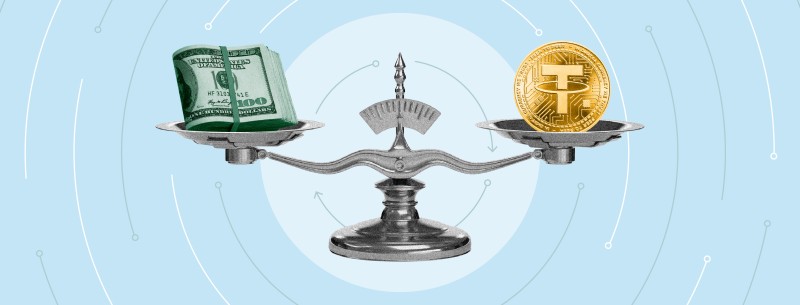
A 1:1 target is not the same as a full dollar reserve, and a reserve is not the same thing as a guarantee.
USDT, USDC, and DAI Are Not the Same
USDT launched in 2014 and runs on several chains, including Ethereum, Bitcoin, Tron, and Algorand. It is tied to the U.S. dollar and is widely used as a trading pair. The source says each USDT is meant to be backed by U.S. dollar reserves, but it also notes debate over whether the backing is full. Tether points to audits and stress tests. Its reserve record and issuer controls still belong in the review.
Three major stablecoin models
- USDT: A centralized dollar-linked token issued by Tether and available across several blockchains. Reserve composition has faced scrutiny.
- USDC: Created in 2018 by Circle and Coinbase through the Centre Consortium. Its reserves are described as cash and short-term U.S. government securities, with weekly attestations.
- DAI: Created through crypto collateral and smart contracts. Its supply rises and falls with vault collateral, which must be worth more than the DAI minted against it.
USDC and USDT are centralized coins, so their issuers can freeze or burn tokens. DAI is managed by a protocol and smart contracts, which makes a central freeze much harder. Reserve reports, attestations, redemption rights, network mix, and issuer location all matter. The source presents USDC as having more open reserve and audit processes than USDT, but that does not make either coin free of risk.
Meme Coins and Bitcoin Cousins
Some crypto assets rise because a community pays attention. Others were made by changing how Bitcoin handles payments. Both groups can be popular. Neither label tells you whether the price is linked to useful network work, reserve assets, or online jokes.
Meme coins and Bitcoin-derived coins
- Dogecoin: Built from the Shiba Inu Doge meme, it is a Litecoin fork that uses proof of work. It has low fees, no fixed cap, and annual issuance.
- Shiba Inu: Started as a meme token and grew into a wider ecosystem with ShibaSwap and other tokens. Its own code does not give SHIB a dollar peg.
- Pepe: An Ethereum token based on the Pepe the Frog meme. The source says it has no utility and was made purely as a meme coin.
- Litecoin: Created in 2011, it uses proof of work and is often presented as a faster, cheaper Bitcoin cousin. An upgrade called MWEB added privacy features.
- Bitcoin Cash: Created in 2017 after a fight over block size, it uses larger blocks for more payments. It keeps proof of work and a 21-million supply cap.
Dogecoin's rise on Reddit and Twitter shows how attention can move a price. That is evidence of community reach, not proof of stable value. A list of crypto coins to watch can mix memes, payment coins, and serious networks, but each needs its own test. A watchlist is not a buy list.
Popular Does Not Mean Safe
Popularity can mean market value, public recognition, trading activity, institutional use, or participation in an ecosystem. Each measure gives a different list. A coin can rank high because people know its name or trade it often, even when that says little about its security or practical use. Price rank and project quality are not the same thing.
The source includes sales terms such as “most lucrative,” “safer,” “reliable,” and “fastest.” Those words are not plain technical measures. Throughput claims depend on the test, fees can rise under load, and a network can post a huge number while also suffering an outage. Crypto prices can drop sharply, and a complete loss is possible. A stablecoin's dollar target does not remove that last risk.
Popularity tells you what people recognize. It does not tell you what a coin is built to do, how it handles risk, or whether it fits your money.
When someone asks about a future crypto coin or what crypto has real potential , there is no honest coin-picking answer. Potential depends on use, security, supply, controls, and the law that applies to you. A story can lift a price. It cannot replace those checks.
ISO 20022 and Other Ways to Compare Coins
One comparison in the source lists eight cryptocurrencies as meeting the ISO 20022 standard. That gives readers another way to compare payment networks. It does not mean those coins are safe, cheap, decentralized, or legal everywhere. A standard is one fact, not an investment rating.
Coins identified as meeting ISO 20022
- XRP
- Stellar Lumens, or XLM
- XDC Network
- Algorand
- Iota
- Hedera Hashgraph
- Quant
- Cardano
XRP, Stellar Lumens, and Cardano also appeared in the broader altcoin material. The standard does not settle payment speed, token supply, governance, or price risk. Use it beside the chain design, consensus model, supply rules, controls, and intended job of the coin.

Wallets, Exchanges, and Private Keys
A wallet lets you interact with blockchain assets, while an exchange lets you buy and sell them. Both add access risks. An exchange can charge fees, require account approval, or fail as a business. A wallet can leave you locked out if you lose a password, private key, or recovery phrase. The blockchain record stays in place, but it cannot restore your access.
The blockchain can keep a perfect record of your coins and still be useless if you lose the password or recovery phrase.
Before moving funds, know which chain and asset you hold, who controls the recovery phrase, and who can freeze the token. Check the exchange account rules too. A decentralized payment network removes some traditional middlemen, but it puts more custody work on the user. That is both the point and the risk.
How to Compare a Popular Crypto Coin Before Investing
There is no fixed answer to what crypto is best or the best cryptocurrency . The answer changes with the job, your time horizon, the rules where you live, and how much loss you can handle. A coin that works for a payment may be poor for long-term holding. A meme coin and a reserve-backed stablecoin should not be judged with the same checklist.
A plain checklist for comparing crypto coins
- Purpose: Is the coin for payments, stable value, app fees, governance, privacy, or memes?
- Network: Which blockchain runs it, and can assets from other chains interact with it?
- Security: How are transactions checked, and what history do the network and its code have?
- Supply: Is the cap fixed, yearly, uncapped, or tied to collateral?
- Token role: Does holding it pay fees, support staking, vote, or offer some other function?
- Control: Can an issuer freeze or burn tokens, or does a protocol manage the rules?
- Access: Can you lose funds through wallet keys, recovery phrases, passwords, or exchange account access?
- Rules: What tax, trading, reserve, and consumer-protection rules apply where you live?
Start with the use case. For a stablecoin, read the peg and reserves. For a smart-contract coin, read the network and its code. For a payment coin, check speed, fees, validators, and settlement. For a meme coin, admit that community attention is the main story. Claims about safety or profit need the same care as any sales pitch.
Even a cryptocurrency index fund can hold a mix of capped coins, stablecoins, governance tokens, and meme coins. The basket does not make those risks the same. For anyone looking into how to invest in cryptocurrency , the work starts with the same checks. Know what you own before worrying about what it might earn.
Regulation, Taxes, and Stablecoin Controls
Crypto rules differ by place and change over time. The source points to the European Union's MiCA rules for stablecoins as a key milestone, with separate groups for tokens tied to other assets and tokens tied to one official currency. It also describes rulebooks in Singapore and Japan, while noting that the U.S. framework was less settled in the material used for this post. That is why a coin's home country and service provider belong in any review.
Stablecoin rules described in the source
- European Union: MiCA covers licensing, reserves, governance, redemption rights, and white papers for covered stablecoins.
- Singapore: The Monetary Authority framework covers single-currency stablecoins tied to the Singapore dollar or an allowed G10 currency.
- Japan: Banks, trust companies, and payment firms may issue fiat-backed stablecoins under reserve rules.
- United States: The source describes debate over reserves, transparency, and anti-money-laundering duties for issuers.
Tax rules also depend on local law. A crypto asset may be treated as currency, a security, property, or another category, and selling it may create a taxable gain. Stablecoins can be used for fraud, money laundering, or sanctions evasion, but public blockchain records can also make the movement of funds traceable. Centralized issuers can freeze wallets, while decentralized protocols resist a direct freeze. Reserves, redemptions, and controls all need checking.
This is general information, not financial, legal, or tax advice. Crypto prices can fall sharply, and a complete loss is possible. Before buying, check the law that applies where you live, read the issuer's reserve and control rules, and know how you will recover your wallet. A list of famous coins cannot do that for you.


Comments on “A Plain Guide to Popular Crypto Coins, Altcoins, and Stablecoins”
No comments yet. Be the first to share your thoughts.