
How You Can Create Cryptocurrency Without Being a Tech Expert
How to Create Your Own Cryptocurrency
If your main question is how do you create cryptocurrency , start by naming the thing you want. You can make a token that runs on Ethereum, or you can build a new coin with its own chain. Those are very different jobs. A token can be tested on an existing network, while a new chain needs shared rules, node and wallet software, and a way to handle fees. I would be skeptical of any guide that treats both as one button.
The demonstration did not claim that creating a token automatically gave it economic value.
The useful question is what the token should do. A contract can record loyalty points, hours worked, game items, IOUs, shares, or local exchange units. It can set rules for supply and transfers. What it cannot do is force anyone to use it or trust it. I would start with a real job for the token before picking a name or chain.
Choose a Token, Coin, or Stable-Value System
When people ask make cryptocurrency , they often use one word for three jobs. The code and risks change with the job. Before writing anything, decide whether you need an asset on an existing network, a native coin, or a system meant to hold a target value.
Three things you might mean
- A token is a contract-based asset on an existing blockchain. It can follow a shared token standard so compatible wallets can recognize it.
- A native coin belongs to its own blockchain and has its own rules. Bitcoin shows how value can move through addresses, signatures, and unspent transaction outputs.
- A stable-value system tries to hold a target such as the U.S. dollar. Its hardest parts include money supply, outside price data, and the choice of target.
If you are asking create a cryptocurrency for a small community tool, an existing network is often the smaller job. Test the contract with fake funds, set a clear supply rule, and make sure people can receive and send the token. Only start a new chain when the project truly needs its own rules and can support the nodes, fees, and long-term code.
Wallets Store Keys, Not Coins
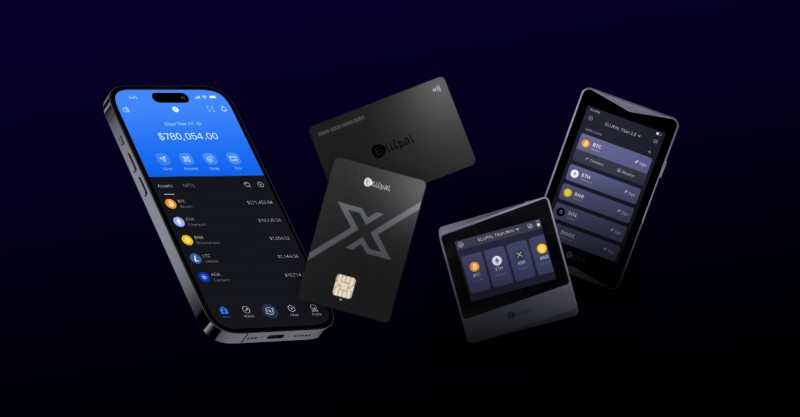
A wallet is needed to hold the keys used to receive, access, and send cryptocurrency. If you have seen what a blockchain is explained, think of a shared ledger made of linked blocks. Its public records are transparent. Your private key is what gives you control over the assets tied to your address.
Wallet parts and jobs
- A public address or public key tells the network where an incoming payment should go.
- A private key signs a request to spend funds and must stay secret.
- Wallet software builds transactions, adds the signature, and sends the result to the network.
- Blockchain nodes check the transaction and add accepted records to the shared ledger.
Losing a private key can result in permanent loss of access, while revealing one allows transactions to be authorized.
Learning get a crypto wallet is mostly a custody choice. A provider can hold the keys and give you account access, or you can manage the keys yourself. When someone asks a provider-held wallet , the basic idea is simple: the provider controls the private key. More control means more responsibility, because loss or theft can have lasting results.
What a Smart Contract Does
In plain terms, a smart contract in crypto is code placed at an address on a blockchain and run when the network gets the right transaction data. In the Ethereum example, the contract sets the token supply and lets compatible clients and contracts handle it. The code makes the rules repeatable; it does not decide whether people want the asset.
The example did not create a separate blockchain. It deployed a token contract to the existing Ethereum network.
This is the line that trips up many newcomers. A token can live on Ethereum, while Bitcoin uses a different system built from transactions, scripts, and proof of work. Creating an asset on one chain does not create a new coin network. It also does not give the creator control over every wallet or exchange that may later list it.
Test an Ethereum Token Without Code
A 2015 Ethereum Foundation demonstration showed a path for someone who could use office software but was not comfortable with command lines. The person created an Ethereum account, added test ether, opened the contract page, pasted Solidity code, and deployed a token. This was a classroom model on an existing chain, not the launch of a new coin.
What the token demo set
- Total supply: 10,000 tokens.
- A chosen name and the symbol percent.
- Two decimal places.
- A compiled MyToken contract with rules for the supply.
- A network fee paid in ether when the contract was deployed.

This is the cleanest answer to make your own crypto currency without building a chain from scratch. But the old menu names and the Morden test network belong to that lesson, so I would not treat them as live setup steps. The lasting lesson is the flow: write or choose contract code, compile it, set supply and display details, test it, then deploy with test funds.
Send and Watch a New Token
The next part of the demo checked that the token could move. A recipient might not see it at first because a wallet only shows tokens it knows. The sender had to share the contract address so the recipient could watch the token before trying to send or receive it.
The demo's send flow
- Open the wallet's send function.
- Choose the new token instead of ether.
- Paste the recipient's address and send.
- On the recipient side, open the contracts tab and use Watch Token with the contract address.
The wallet could fill in the token's name, symbol, and decimal count from the contract. If a person changed those fields, the change affected only that wallet's display. The token might record hours worked or act as a local exchange unit, but none of those features gave it economic value on its own. A working button is not proof of demand.
Build a Bitcoin Transaction From Scratch
A separate Bitcoin demo went much deeper. It created, signed, and sent a testnet transaction in pure Python without outside libraries. The aim was not to offer a new coin. It was to show how keys, addresses, signatures, and unspent transaction outputs fit together.
What the Bitcoin demo built
- A definition for Bitcoin's secp256k1 curve, the math used to derive keys.
- A private key and the matching public key.
- A Bitcoin address made by hashing and encoding the public key.
- A transaction that spends an existing unspent output and creates new outputs.
- A signed transaction sent to Bitcoin nodes, followed by a multiwallet consolidation example.
A system is better understood by creating it.
The private key was a large secret number. Bitcoin multiplies it by a known point on the secp256k1 curve, a kind of elliptic-curve math, to produce the public key. The address then used SHA-256, RIPEMD-160, a network byte, a checksum, and Base58Check. The public key and address could be shared. The private key could not.
Sign, Broadcast, and Confirm
Bitcoin does not spend half of an unspent output. A transaction consumes the whole output, then creates new outputs that add up to less than the input. The leftover becomes the fee. In the demo, a 0.001 BTC output paid 0.0005 BTC to another wallet, returned 0.000475 BTC as change, and used a 0.000025 BTC fee.
What a Bitcoin transaction needs
- The ID and output index of the earlier transaction being spent.
- New output amounts and locking scripts that say who may spend them.
- A signature made with the private key and the related public key.
- A path to broadcast the finished bytes to the network and check whether a block accepts them.
The signature code double-hashed the message, used ECDSA, Bitcoin's signature method, to make values called r and s, and placed the signature and public key in the unlocking script. Nodes combined that script with the old locking script, checked the public-key hash, and checked the signature. One line in the source mixed up its fee words, while the worked numbers used 2,500 satoshis, or 0.000025 BTC. Check the math before you trust a demo with real funds.
Why Handwritten Crypto Is Risky
The Bitcoin example did not cover the whole protocol. It skipped later address and script formats such as Pay-to-Script-Hash, SegWit, and Bech32. It also left out full transaction checks, mining, the peer-to-peer handshake, and many script commands. That makes it useful for learning, not for holding money.
Production cryptography should not be implemented from scratch.
The signing demo also used a simple random-number method so its results could repeat. Reusing one temporary key for two messages can expose the private key. The source points to RFC 6979 for safer rules for that one-time number and names standard books and code projects for further study. Hey, don't skip this part: use tested libraries, test networks, and outside review before a wallet controls anything of value.
Build a Wallet Around Key Safety
A blockchain wallet does more than show an address. It may need chain access, key protection, transaction building, signing, broadcast, balance checks, and status updates. The hard part is not the balance page. It is keeping control of keys while passing correct data to the network.
Wallet jobs
- Create or connect to the user's blockchain account.
- Keep private keys in protected storage and control who can use them.
- Build and sign requests to send cryptocurrency or tokens.
- Broadcast requests and report submission, acceptance, confirmations, and errors.
- Show balances, transaction history, transaction details, token lists, and NFT holdings.
The sample wallet sends a request to a backend API. API Gateway and Lambda check who made the call and shape the reply. Managed Blockchain Query returns indexed chain data, while Managed Blockchain Access can build and send supported transactions. The front end then shows the balance, history, details, and token list. Managed tools can help with the plumbing, but they do not choose the wallet's custody rules.
Managed Chain Access Is Not a Wallet by Itself
The AWS example splits network calls from key storage. Access acts as a gateway for supported Bitcoin and Ethereum networks. Query supplies indexed data through API calls. Key Management Service stores cloud keys, while CloudHSM can generate keys inside certified hardware spread across several availability zones.
Managed pieces and their jobs
- Managed Blockchain Access interacts with a public chain and can send supported transactions.
- Managed Blockchain Query returns live and historical balances, events, and transaction data.
- Key Management Service controls cloud key storage and access.
- CloudHSM provides a FIPS 140-2 Level 3 hardware security module for key work.
- API Gateway and Lambda handle authentication, authorization, and app-specific requests.
In the sample, calls such as GetTokenBalance, ListTransactions, GetTransaction, and ListTokenBalances do the reading. A nextToken value lets the app ask for another page when a list is too large. These services can save a team from running every chain listener, but the app still needs clear rules for user access, key use, transaction review, and failure. Those tools do not settle those choices for you.
Research the Ledger Before You Trust a Token
Cryptocurrency tracing follows funds across one or more blockchains. It can show which addresses and contracts received, sent, or held assets, but it cannot tell you that a project is honest by itself. The research example gathers coin lists, market data, exchange lists, balances, and transaction records before asking deeper questions.
A basic research set
- Supported coin IDs, names, and symbols.
- Coin prices, market capitalization, and related market data.
- Known exchange IDs and names.
- Transaction lists, details, events, balances, and token holdings.
- The token contract address and the chain that hosts it.
- Regulatory guides, research records, and proposed legislation found through trusted public sources.

The Postman example sends three CoinGecko requests with async.parallel, waits for the results, and maps them into one payload. That shows how a blockchain works only in a loose sense; the API calls read outside market data. For chain facts, use the ledger and its records. The Library of Congress guide and Congress.gov can help with research, but changing prices, claims, and rules still need clear sources.
Stable-Value Cryptos Add a Monetary Rule
A 2018 economic discussion of Basis looked past the token code and asked how its value could stay near a target. The proposal would change token supply in response to the Basis exchange rate. The discussion called this a decentralized, rules-based form of money with no direct human decision at each supply change.
It operates as a decentralized, protocol-enforced algorithm, without the need for direct human judgment.
A dollar target made the most sense to the discussion for a coin meant to work beside dollars and help merchants avoid a moving Bitcoin price. An NGDP target was discussed for a coin meant to replace the dollar at a larger scale. Both choices need reliable outside data. A broken data feed could halt the rule, and manual updates could add errors or manipulation. Stable-value design is not just a smart contract; it is a bet on money, data, and incentives.
Decide Who Holds the Keys
Custody is part of the product, not a side note. A provider-held wallet managed through a service such as Coinbase or Gemini puts key control in the provider's hands. A self-managed wallet gives the owner more control, but the owner must protect the keys and build a safe recovery plan. Hey, this one's important: the choice decides who can move funds and who carries the loss.
Three custody paths
- A provider-held wallet is easier to connect to buying, selling, and cash transfer because the provider manages the keys.
- A self-managed wallet keeps control with the owner and makes key loss or theft the owner's risk.
- A donation platform can create and manage a wallet, receive assets, convert them to cash, issue receipts, and send the cash to a bank account.

The donation example shows why conversion is a wallet use, not a side trick. A nonprofit can share a giving link or QR code, receive the asset, sell it, and record the cash. The source says prompt conversion limits the effect of market swings. Its U.S. example also calls for a written gift policy, proof of liquidation, donor acknowledgments, and the required tax forms, with an accountant asked to apply the rules to the group.
A Careful Build Path
If you still ask how do you create cryptocurrency , use the order below. And if your real question is how to create one , keep the first version small. Test the rules with play money, then move to real value only after the wallet, keys, and failure cases are understood.
A plain build order
- Write down what one token represents and who should use it.
- Choose an existing blockchain or state why a new chain is needed.
- Draw the supply, transfer, fee, and admin rules in plain language.
- Set up a test network, fake funds, and known test addresses.
- Generate keys with trusted software or a protected key service.
- Compile and test a contract, or test the chain code with known inputs.
- Build the wallet flow for receiving, signing, sending, status, and recovery.
- Test bad addresses, wrong amounts, lost keys, failed requests, and duplicate actions.
- Check the legal, tax, custody, and donation rules that apply to the planned use.
Do not move real funds until you can answer five plain questions: Who holds the keys? What does one unit represent? How can supply change? How does a user recover from a mistake? What happens when a host, node, exchange, or data feed fails? If the answers are fuzzy, the project is not ready. Code can make a rule run. It cannot make the rule sound, useful, or safe on its own.


Comments on “How You Can Create Cryptocurrency Without Being a Tech Expert”
No comments yet. Be the first to share your thoughts.