A Beginner's Guide to Choosing the Right Cryptocurrency E Wallet
What a Cryptocurrency E Wallet Does
A cryptocurrency e wallet is a digital tool for storing and managing the keys needed to access cryptocurrencies. The wallet does not store the cryptocurrencies themselves in the way a physical wallet holds cash. Instead, it holds or interfaces with cryptographic keys that authorize access to balances and transactions recorded on a blockchain. Some developer material uses the broader expression that coins and tokens are "kept" in a crypto wallet software , while also describing the wallet as a holder of private keys.
You can use a digital asset wallet to:
What a wallet can do
- Store and manage access to cryptocurrencies.
- Send and receive digital assets.
- Hold non-fungible tokens, stablecoins, and other blockchain-based assets.
- Interact with decentralized finance protocols and other blockchain applications.
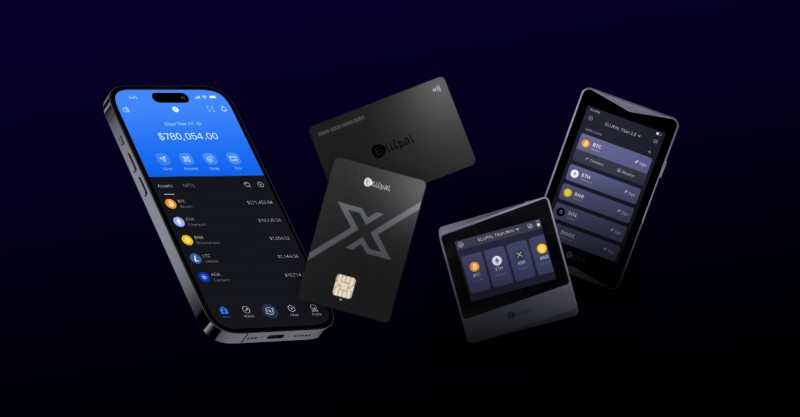
- Connect to exchanges, payment platforms, DeFi services, and physical or virtual card programs.
- Authorize, sign, or broadcast transactions.
Digital asset wallets are similar in concept to a physical cash wallet. A person might keep some cash in a pocket, some in a bank account, and some in a safe at home. Likewise, cryptocurrency, NFTs, and other digital assets can be held through an exchange account, a software wallet, or a hardware device.
Having a wallet under the user's control can provide greater control over assets. A wallet address can receive funds from another person, while the corresponding private key authorizes the user to spend or transfer them. The public address can be shared; the private key should remain confidential.
One wallet source reported that more than 150 cryptocurrency wallets were available in the market in 2022. A separate Statista figure cited in a 2022 development article stated that more than 82 million people had registered in a cryptocurrency wallet app for Bitcoin, Ethereum, Tether, and other coins or tokens.
Blockchain, Public Keys, and Private Keys
Cryptocurrencies such as Bitcoin are acquired, stored, transferred, and traded on computer networks through blockchain technology. Blockchain is a distributed ledger that allows a group of computers to transmit and verify transactions. The 2019 U.S. Department of Justice article describes the blockchain as a permanent public record that helps protect against counterfeiting and double spending.
Transactions are publicly accessible, although the true names and identities of the people sending or receiving funds are not normally visible in the transaction data. The article notes that blockchain transactions can be traced and de-anonymized through technical analysis of transaction layers and patterns, but that the process is complex.
A digital wallet contains two long, computer-generated alphanumeric keys or addresses:
The two keys
- The public key is the wallet's address. It functions much like a bank account number and can be shared with someone who wants to send digital assets.
- The private key functions much like a password, PIN, or authorization credential. It allows the owner to access and authorize the movement of funds.
A wallet must support the cryptocurrency and blockchain network being used. Transferring an asset to a wallet that cannot support that asset or network may result in loss. Before sending funds, the sender and recipient need compatible wallet addresses and networks.
The phrase "Not your keys, not your crypto" summarizes the distinction between custodial and non-custodial wallets. It emphasizes that control over the private keys is what gives a user direct authority over the assets. A blockchain wallet is only as secure as the keys you hold.
Custodial and Non-Custodial Wallets
The custody model you choose matters a lot. It determines who holds the keys and who controls the assets. Let me walk through both.
### Custodial Wallets
A custodial wallet is controlled and maintained by a third party. The provider holds the private keys and acts as an intermediary between the user and the blockchain network. Custodial wallets are often provided by cryptocurrency exchanges and are generally easier for beginners to set up.
The source materials associate custodial wallets with several characteristics:
Custodial wallet traits
- The user does not own or control the private key.
- Control is undertaken by the third-party provider.
- The provider handles much of the work involved in interacting with the blockchain.
- Recovery may be available through identity verification or provider support.
- Transaction fees may be lower, according to one development source.
- A stable internet connection is generally required.
- Holding and withdrawal fees depend on the provider.
- Interactive interfaces and customer support can make the wallet easier to use.
- Privacy and security are affected by the provider's systems and security practices.
- A compromise of the provider could expose users to loss.
Custodial arrangements provide convenience, but the user depends on the provider to safeguard access to the assets and keep the account operational. If you are just starting out, a custodial option may be the easiest how to get a crypto wallet path, but you are trusting someone else with your keys.
### Non-Custodial Wallets
A non-custodial wallet is controlled by the user. The user holds the private key and authorizes transactions directly. With full ownership of the key, the user has total control over the digital assets and can interact with decentralized finance protocols.
The source materials associate non-custodial wallets with these characteristics:
Non-custodial wallet traits
- The user owns the private key.
- The user is solely responsible for security.
- Transactions require authorization from the user's key or seed phrase.
- The wallet can be used without an intermediary holding the key.
- The user can access DeFi protocols that require direct wallet authorization.
- There is greater autonomy over funds and transaction execution.
- Technical knowledge is generally required.
- Support may be more limited.
- Losing the private key or recovery phrase can result in permanent loss of access.
- The cited comparison lists no wallet holding fees or withdrawal fees for non-custodial wallets.
One comparison describes non-custodial wallets as secure from cyber threats when there is not an internet connection, while also requiring users to secure private keys and recovery phrases. Custody and connectivity are separate classifications: a wallet can be non-custodial and still be connected to the internet, or it can be non-custodial and designed for offline storage.
"Not your keys, not your crypto" summarizes the distinction between custodial and non-custodial wallets. It emphasizes that control over the private keys is what gives a user direct authority over the assets.
Hot and Cold Wallets
Custodial status concerns who controls the keys. Hot and cold classification concerns whether the wallet is connected to the internet. This is a key distinction that affects both convenience and security. When people debate hot wallet vs cold wallet crypto , they are really talking about connectivity versus isolation.
### Hot Wallets
A hot wallet is connected to the internet and is intended for quick access. Hot wallets are commonly applications on a phone or computer that hold digital assets for immediate use in trading or spending.
The source materials associate hot wallets with:
Hot wallet traits
- Online connectivity.
- Immediate access to funds.
- Everyday trading and spending.
- Greater exposure to online attacks.
- Possible use of PIN codes, passwords, and two-factor authentication.
- More frequent interaction with internet-connected applications.
Hot wallets are generally more accessible than cold wallets, but they are also more exposed to compromise because of their connection to the internet.
### Cold Wallets
A cold wallet is designed to keep private keys offline. Cold wallets are often used for long-term storage because they are not connected to the internet during normal use.
The source materials associate cold wallets with:
Cold wallet traits
- Offline storage.
- Greater protection from online cyber threats.
- Lower accessibility.
- Private keys stored on a physical device or paper.
- Approval of transactions through a physical signing action.
- Use for long-term holdings.
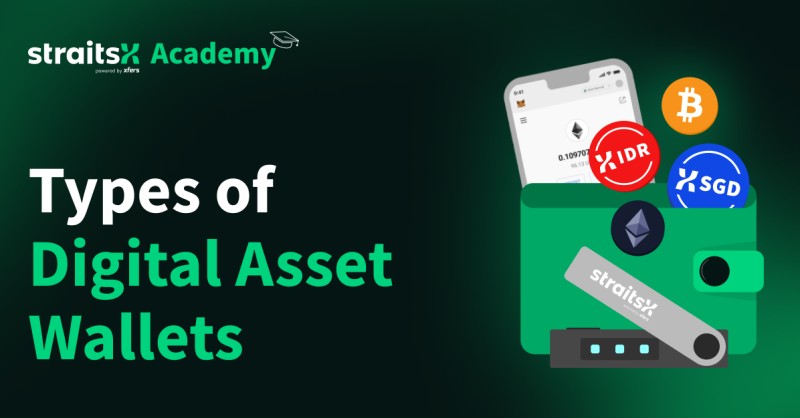
Popular hardware-wallet examples named in the sources include the Ledger Nano X and Trezor Model T. Ledger is identified as a StraitsX partner because of its user-friendliness and compatibility with the XIDR and XSGD stablecoins.
Both the Ledger Nano X and Trezor Model T complete transactions only after the user physically approves or signs the transaction on the device. Other brands and models may use different approval mechanisms.
### Paper Wallets
Paper wallets were among the earliest cold wallet types, introduced in 2011. They were recommended for a period, although their popularity declined in 2016.
A paper wallet contains a public address and a private key, often represented by two QR codes. The paper is offline and described as difficult to hack while offline, but it can be fragile and vulnerable to theft, fire, water damage, or physical loss. Anyone who obtains the paper or scans both QR codes may be able to access the assets.
Recovery Phrases and Seed Backups
A non-custodial wallet commonly provides a recovery or seed phrase that can recreate the private key. The sources use different ranges for seed-phrase length:
Seed phrase lengths
- One source describes common phrases of 12, 18, or 24 words.
- Another development source gives a general range of 12 to 24 words.
- The 2019 U.S. Department of Justice article describes recovery seeds of 12 to 16 words.
The length depends on the wallet implementation. The sources do not resolve the difference, but each emphasizes that the phrase must be recorded and protected. If the private key or recovery phrase is lost and no backup exists, the owner generally cannot recover the assets.
The source materials identify several offline storage methods.
### Steel Capsules
Steel capsules are described as portable, durable, and relatively indestructible. Some are credit-card sized, while others use tube or other designs. They can be purchased as a physical backup for a recovery phrase.
### Safe-Deposit Boxes
A recovery phrase can be stored in a safe-deposit box rented from a bank. Access depends on maintaining the key or combination and complying with the bank's rules.
### Offline Memory Devices
A recovery phrase can be stored on an SD card, USB drive, external SSD, CD, or another offline memory device. The device must not be exposed to an online or compromised computer. Memory devices can also degrade over time, so the source warns that they are not necessarily time-proof.
### Split Backups
A phrase can be divided and stored in different locations. The source describes this as making it harder for malicious actors to find the complete phrase, but it also adds complexity if the owner needs to recover the wallet.
The user is the only custodian of a non-custodial wallet. The source uses the case of Stefan Thomas, who lost access to 7,002 BTC after losing his recovery seed phrase, to illustrate the consequence of failing to preserve the key.
The user is the only custodian of a non-custodial wallet. The source uses the case of Stefan Thomas, who lost access to 7,002 BTC after losing his recovery seed phrase, to illustrate the consequence of failing to preserve the key.
Security Features Used by Wallet Applications
Wallet applications may combine several layers of protection. The source lists these as common in top rated crypto wallets :
Security features
- Strong passwords and PINs.
- Two-factor authentication.
- Google Authenticator or another authenticator application.
- Biometric authentication.
- Encryption.
- Tokenization.
- Automatic logout.
- Transaction monitoring and alerts.
- Multi-signature approval.
- Backup of private keys or recovery phrases.
- Antivirus and malware protection on devices that hold wallets.
- Offline or cold storage for long-term holdings.
Mobile wallet applications are exposed to malware and viruses and therefore require additional protection. Desktop applications should be kept on secure systems and used with current security software. Paper wallets avoid internet-connected software but introduce physical-storage risks. Hardware devices isolate keys from the internet and require explicit physical authorization.
Wallet Selection Factors
The source materials organize wallet selection around several practical dimensions. Here is what to think through before you pick one. If you are wondering who has the best crypto wallet , the answer depends on your use case.
Selection factors
- Asset and Network Support - A wallet must support the selected cryptocurrency and blockchain. Compatibility is especially important for transfers involving assets on different networks.
- Key Ownership - Custodial wallets are easier for beginners but leave key control with a provider. Non-custodial wallets provide direct asset control but place responsibility for backups and security on the user.
- Intended Use - Hot wallets are associated with immediate access, everyday transactions, trading, and spending. Cold wallets are associated with offline storage and long-term holdings.
- Recovery Options - Custodial providers may offer account recovery through identity verification. Non-custodial owners need a durable backup of a private key or seed phrase and face permanent loss if every copy is lost.
- Technical Requirements - Non-custodial wallets and DeFi interactions require more technical knowledge than typical custodial exchange accounts. Cold hardware wallets also require an additional physical signing step.
- Fees - Custodial holding and withdrawal fees depend on the provider. The cited non-custodial comparison lists no holding or withdrawal fees. Developer-oriented custodial services may also charge relatively low per-transaction fees.
- Security - Hot wallets provide convenience but remain connected to the internet. Cold wallets reduce online exposure but must still be protected physically. Custodial wallets reduce key-management responsibility but introduce provider and counterparty risk.
- Support and Interface - Custodial services are more likely to provide an interactive interface and customer support. Non-custodial wallets can have limited direct support and require greater user involvement.
- DeFi Access - Non-custodial wallets are designed to interact directly with decentralized finance protocols. This can give users greater autonomy and transparency in fees, but it also places greater responsibility on the user.
- Payment and Merchant Functions - A wallet may be used only to hold and authorize blockchain transactions, or it may also offer cards, fiat conversion, stablecoin settlement, merchant acceptance, peer-to-peer transfers, budgeting tools, and investment features.
- Provider Compliance and Reliability - Large custodial or card platforms may be able to provide licensed payment infrastructure, principal card membership, multi-jurisdiction compliance architecture, customer support, and established transaction processing. These capabilities can differ substantially from a self-custodial wallet with no third-party provider.

Security Lessons from Large Cryptocurrency Exchange Attacks
When a new technology or system launches, defenders may be at a disadvantage because attack patterns and defensive resources are not yet established. Threat actors nevertheless develop attack patterns early and repeat them with minor changes. Studying early, high-impact attacks can reveal techniques that are reused later.
A 2023 analysis examined three outlier attacks that occurred before Bitcoin's 2021 market peak. All three targeted centralized cryptocurrency exchanges and resulted in unusually large quantities of Bitcoin being stolen or converted.
The three attacks represented approximately $1.09 billion in combined assets, measured using Bitcoin's price at the time of exfiltration and the later value of assets that remained in threat-actor-controlled wallets. Most of the assets were not marked, frozen, or recovered and remained in those wallets. For comparison, almost $7.2 billion in cryptocurrency had been stolen by the end of 2022, and the three attacks represented approximately 15% of total losses.
The source's map covers attacks exceeding $1 million between 2009 and 2022. Bitcoin reached an all-time peak price of $65,000 in November 2021. Large-scale attacks began with Mt. Gox between 2011 and 2014 and continued at a steady rate, increasing before 2018, which the analysis associates with Bitcoin's earlier price increase. A gap shortly after March 14, 2020, is attributed to the first global lockdowns. A later cluster of attacks shows repeated patterns emerging as cryptocurrency prices increased.
The analysis identified the following security practices:
Security practices from analysis
- Continuous security testing.
- Transparent tracking of known vulnerabilities.
- Least-privilege access for privileged accounts.
- Strong primary-key architecture and signing protocols.
- Multi-signature validation for large asset balances.
- Restrictions on large concentrations of funds in internet-connected wallets.
- User-facing transparency about DeFi system design.
- Smart-contract code validation and review.
- Design of signing systems around worst-case compromise scenarios.
Poor design involving smart contracts and wallet flaws was responsible, by some measures, for more than 70% of large-scale attacks through 2022. In 2022, known vulnerabilities alone were reported in 20% to 50% of attacks on cryptocurrency financial technology. Network-design and protocol-implementation flaws accounted for approximately 18% of large attacks by 2022.
Mt. Gox, 2011 to 2014
Mt. Gox reported losses of up to 850,000 BTC, valued at $470 million in the source's historical analysis.
The first recorded incident occurred on June 13, 2011. The initial compromise reportedly originated from a machine owned by a recent Mt. Gox auditor who may also have been connected to an account belonging to the platform founder. A lawsuit suggested that a dictionary attack may have guessed the auditor's password, while later reporting indicated that known credentials provided privileged access.
The attacker obtained access to private keys in a hot wallet that remained connected to the network and used privileged trading access to transfer Bitcoin. Mt. Gox reported cybertheft across 478 accounts.
On June 17, 2011, a message offering the Mt. Gox user database for sale appeared on Pastebin under the username "crazlestinger." Reporting indicated that vulnerabilities were known to the platform's founder and might have remained present for a year or more. The extended exposure could have allowed multiple threat actors to exploit the exchange. The source notes that EclecticIQ analysts believed the Pastebin poster was probably not the same actor responsible for the auditor-account compromise or the later actions attributed to two Russian nationals. The posting date might also have differed from the compromise date.
In September 2011, two Russian nationals identified existing weaknesses and reportedly used an unknown vulnerability to access an Mt. Gox server. They compromised some of the primary signing keys used to authorize transactions and slowly transferred Bitcoin away until 2014.
Lawsuits suggested that Mt. Gox's key architecture and wallet design were major contributors to the series of incidents. The stolen Bitcoin was reportedly laundered through the BTC-e exchange. Bankruptcy proceedings stated that 850,000 Bitcoin were lost. Approximately 200,000 were reported as found or recovered, although only 1,811 could be reliably traced according to the source.
The source describes Mt. Gox as the first cybertheft of considerable scale in Bitcoin's history and associates the incident with the first major exchange attack.
Bitfinex, 2016
Bitfinex reported the theft of 120,000 BTC, valued at $72 million.
The original entry point was unknown. Most stolen funds reportedly remained in the original wallet. The analysis says the attack likely took place over more than a year, even though the funds were transferred in one transaction and sent to one wallet.
The attacker compromised more than one signing key used in a multisignature protocol. Bitfinex held two keys and BitGo, an associated company, held a third. No additional service was in place to identify and block the large withdrawal. Investigators found no evidence that BitGo servers had been compromised, which pointed toward the Bitfinex side of the signing protocol.
The source presents two possible explanations:
Possible attack explanations
- The attacker performed extensive reconnaissance to identify the privileged signing systems and protocol.
- The attacker entered from another network node that served as the origin of the compromise.
Both explanations require greater technical skill, resources, and patience. The attack produced few indicators of compromise, a characteristic associated in the source with advanced persistent threat groups. If the attack was committed by an individual, the analysis says the person would need to have been highly skilled and potentially an insider with detailed knowledge of internal systems.
Elliptic identified four concentrated campaigns to exfiltrate or launder the stolen funds. One IP address and the same email provider were used to create accounts over a short period. The United States later prosecuted two people after movement of the funds was detected. Law enforcement obtained access to a cloud account linked to a defendant, where private keys for a laundering wallet were stored. Smaller transfers from the original wallet continued to occur.
The analysis reports that key exposure appeared in 4% to 16% of cryptocurrency incidents in 2022, while other sophisticated techniques appeared in more than 60%. The Bitfinex incident is compared with the 2022 Ronin Bridge attack, which resulted in hundreds of millions of dollars in losses.
Coincheck, 2018
Coincheck experienced an attack on January 26, 2018, involving 46,000 BTC and a reported value of $532 million.
The attack targeted a primary hot wallet used by the exchange. The wallet did not use multisignature technology to validate transactions. The original NEM tokens were sent to a wallet controlled by the threat actor on the same day.
The source states that the financial technology network was designed around a Proof of Importance consensus process. This process was intended to allow nodes to agree on transactions without requiring processing-power-based validation and was described as helping prevent 50% consensus attacks.
The threat actor likely gained access to a privileged machine to bypass the normal Proof of Importance process. The source identifies targeted phishing or another initial entry point as possible methods of obtaining the required privileges.
Exfiltration through Bitcoin began on February 1, 2018. The largest recorded transaction occurred on March 20, 2018, when 1,000 BTC were moved through Mosaic. A total of 4,778 transactions completed the exfiltration phase, with most ranging from approximately $50 to $9,000.
The source identifies a recurring security practice of preventing large balances from accumulating in a single hot wallet. Cold storage can reduce continuous internet exposure.
North Korea was suspected after an initial 2018 investigation. A later 2019 report implicated Russian cybercriminals because malware-as-a-service variants associated with Russian developers were found. The source preserves both attribution developments.
Later Attacks and Broader Practices
The analysis also identifies several later attacks for comparison:
Later attacks
- The Poly Network attack resulted in most of the earnings being returned voluntarily.
- In the 2022 Binance attack, most stolen funds were frozen by Binance.
- The FTX case still contains unresolved questions, with reporting pointing to an insider and a total transfer of approximately $400 million.
- The 2022 Ronin network attack, valued at more than $500 million, was attributed to a North Korea-linked advanced persistent threat group.
Two unrelated attacks in the first half of 2023 accounted for more than 72% of recorded losses against cryptocurrency platforms during that period. The root causes fell into the same categories identified through the earlier exchange attacks: key management, wallet or vault configuration, and smart-contract code transparency and validation.
The source states that minimum cybersecurity standards are most likely to be achieved through centralized regulation, while also emphasizing continuous monitoring, vulnerability tracking, secure key design, multisignature controls, and restrictions on internet-connected balances.
Conventional E-Wallet Apps and Crypto-Enabled Payment Features
An e-wallet app, or digital wallet, is a mobile or web application used to store, manage, and make digital payments. Conventional e-wallets store payment credentials such as debit or credit card information and can support contactless payments. Many also offer peer-to-peer transfers, budgeting tools, reward points, cryptocurrency transactions, stock trading, or other financial features. Some people ask what is a crypto trust wallet when they see these hybrid services, but the answer varies by provider.
Encryption and tokenization are used to protect financial data and payment credentials. The apps differ from blockchain wallets in their primary function, although some services combine payment, investment, and cryptocurrency features.
Top E-Wallet Apps
The source materials review several mainstream digital wallet apps. Here is a quick look at what each offers.
### PayPal
PayPal supports online transactions, money transfers, merchant payments, and contactless payments in stores. It supports multiple currencies and is used by both individuals and businesses.
Key features include global availability, merchant integration, fast online checkout, online payments, money transfers, in-store contactless payments, and business invoicing. PayPal uses two-factor authentication, encryption, and buyer and seller protection. The source reports 490 million active users worldwide and $400 billion in total payment volume during the first half of 2024.
### Google Pay
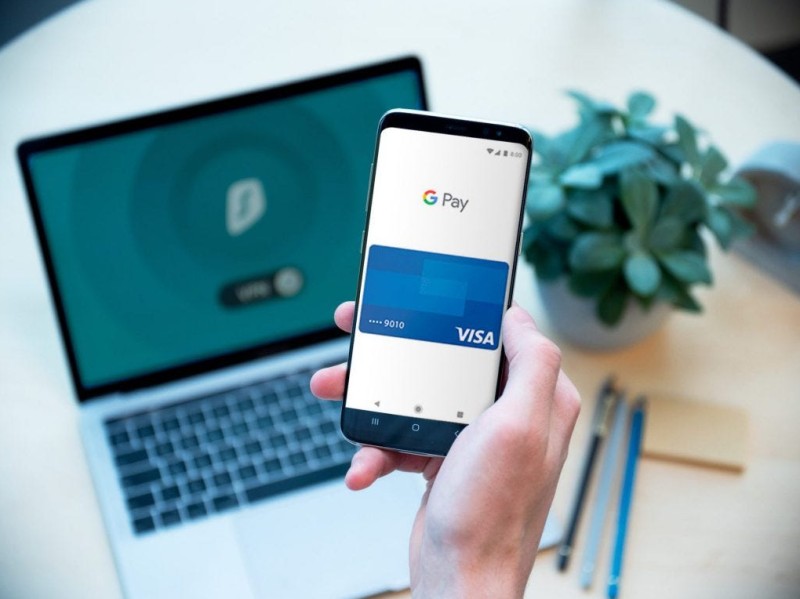
Google Pay provides peer-to-peer payments, in-store purchases, bill payments, and storage of debit and credit cards. It can also hold loyalty cards, rewards, and boarding passes.
Key features include peer-to-peer transfers, contactless purchases, loyalty card integration, integration with Google accounts, and connections with services such as Gmail and Google Shopping. Google Pay uses tokenization, encryption, fingerprint authentication, and face recognition. The source reports more than 200 million active users in 2024 and integration with 85% of global retailers, while also describing expansion into Eastern Europe and South America.
### Apple Pay
Apple Pay is available for iPhone, iPad, and Apple Watch users. It supports in-store, online, and Safari payments, as well as loyalty programs, boarding passes, and tickets.
Key features include one-tap payments, online payments through Safari, integration with Apple devices, and Face ID and Touch ID authentication. Apple Pay uses tokenization, encryption, and biometric authentication. The source states that card numbers are not stored on the device or on Apple servers. It reports 600 million users in 2024, up from 500 million in 2023, and acceptance at 95% of U.S. retailers.
### Cash App
Cash App, developed by Square, supports peer-to-peer transfers, Bitcoin purchases, stock investments, and direct deposits.
Key features include peer-to-peer money transfers, buying and selling Bitcoin, stock investments, and direct deposits. Cash App uses encryption, PIN entry, and two-factor authentication. The source reports 57 million monthly users in 2024 and revenue of $14.68 billion in 2023. Its combination of payments, stock trading, and Bitcoin transactions distinguishes it from conventional payment-only wallets.
### Samsung Pay
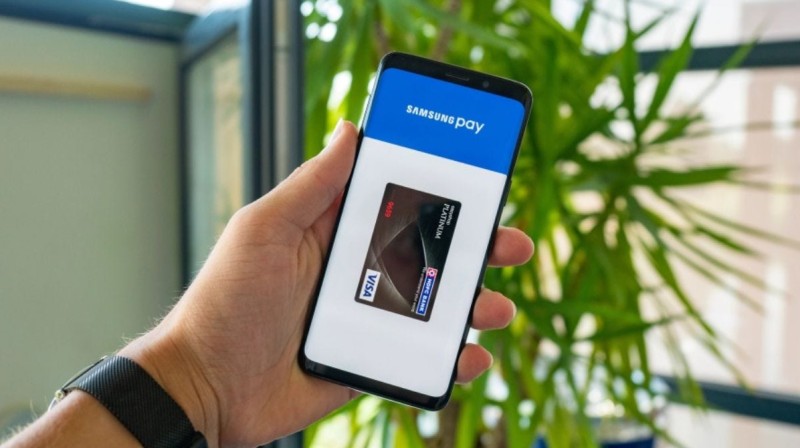
Samsung Pay supports contactless payments through Near Field Communication and Magnetic Secure Transmission. MST can work with newer and older payment terminals.
Key features include NFC and MST contactless payments, integration with Samsung services, and purchase rewards. Samsung Pay uses Knox security, fingerprint and iris authentication, and tokenization. Its compatibility with older magnetic-stripe readers is presented as useful where contactless-only readers are not available.
### Venmo
Venmo combines peer-to-peer payments with social features. Users can view, like, and comment on transactions, split bills, pay rent, share expenses, and transfer money to bank accounts.
Key features include peer-to-peer transfers, social transaction features, bill splitting, some in-app merchant purchases, and instant bank transfers. Venmo uses encryption, PIN entry, and multi-factor authentication. The source reports more than $250 billion in processed transactions in 2024, a 9% increase from the prior year, and 95 million active users.
### Zelle
Zelle supports instant transfers between bank accounts through a network of partnered U.S. banks. It can be used through a bank's existing app, and a separate e-wallet balance is not required.
Key features include instant bank-to-bank transfers, no additional app when the user's bank supports Zelle, no fee for most transactions, and integration with existing banking applications. The service relies on bank-level security, encryption, and multi-factor authentication.
### Revolut
Revolut is a multi-currency wallet with budgeting, currency exchange, cryptocurrency trading, stock trading, and premium account features. It is used by travelers, businesses, and people who receive or hold multiple currencies.
Key features include multi-currency accounts, currency exchange, budgeting tools, cryptocurrency trading, stock trading, and premium account services. Revolut uses transaction limits, biometric authentication, and 3D Secure for online payments. The source describes it as popular in Europe and expanding globally.
Digital Wallet Integration in E-Commerce
DTN, August 30, 2024; last updated February 21, 2025
Digital wallets are software applications that store payment and personal information on mobile devices or computers. They provide an alternative to entering payment information directly into a checkout form for every transaction.
E-commerce sources identify several reasons businesses integrate digital wallets:
Why businesses integrate wallets
- A faster checkout process.
- Less manual entry of payment information.
- Fewer abandoned carts.
- Improved customer satisfaction and loyalty.
- Higher conversion rates.
- Encryption and tokenization that can improve payment security.
- Support for growing use of Apple Pay, Google Pay, Samsung Pay, and similar services.
- Access to customers in different countries and regions.
- Potentially fewer requirements for operating multiple payment gateways.
E-Commerce Wallet Categories
Mobile wallets operate through smartphone applications and commonly use NFC or QR codes. Examples named in the source include Apple Pay, Google Pay, Samsung Pay, and PayPal.
Online wallets operate through websites or web-based accounts. Examples include PayPal, Stripe, and Skrill.
Cryptocurrency wallets store and manage assets such as Bitcoin, Ethereum, and Litecoin. Examples include Coinbase Wallet, MetaMask, and Blockchain.com Wallet.
E-Commerce Integration Steps
A business integrating digital wallets follows these steps:
Integration steps
- Choose a payment gateway that supports the desired wallets. Named gateways include Stripe, PayPal, and Adyen.
- Enable the required digital wallet options in the payment gateway.
- Add the gateway's integration code to the checkout process. This can involve both front-end and back-end changes.
- Test the payment flow and wallet functionality.
- Promote wallet availability through the website, social media, and email campaigns.
Integration Considerations
Security and compliance:
Security and compliance
- The provider should follow relevant security standards.
- PCI DSS compliance is specifically named.
- Encryption and tokenization should be used.
- The business must protect API credentials and integration configuration.
Transaction fees:
Transaction fees
- Fees differ by provider.
- The selected fee structure should be compared with the business's transaction volume and margins.
Customer support:
Customer support
- The provider's support availability and responsiveness should be evaluated.
- Support is important when a customer cannot complete a wallet payment.
International payments:
International payments
- A business serving multiple countries may need multiple currencies and international payment methods.
Scalability:
Scalability
- The provider should be able to handle current transaction volumes and future growth.
The source describes digital-wallet adoption as increasing and states that businesses may need to integrate wallets to meet customer expectations for speed, security, and convenience.
Account-to-Account Payments for Buying Crypto
Token.io, November 30, 2021
The article projected that, during the following 12 months, account-to-account payments would become the mechanism behind more than half of all e-wallet top-ups in the United Kingdom and across Europe. It described crypto businesses as early adopters of open and direct bank payments.
### CoinGate's Founding and Use Case
CoinGate was founded in 2014 with the mission of introducing cryptocurrencies to businesses.
CoinGate was founded in 2014 with a simple mission: introduce cryptocurrencies to businesses. Like many early adopters, our founders were fascinated with the idea of cryptocurrencies and their benefits. However, the crypto community was still rather small. The only thing that Bitcoin was used for at that time was speculation and sending transfers between a small group of people. With the CoinGate platform, we started enabling businesses to accept cryptocurrencies even if the crypto receiving party did not know anything about the technology. Meanwhile, this also created a real-world use for those who hold crypto.
### Reasons for Direct Account-to-Account Payments
There is a variety of reasons why account-to-account payments were their go-to choice. Firstly, and most importantly, account-to-account payments share similarities with cryptocurrencies: cutting out intermediaries that, as some might say, do not really create any value. Next, the technology is very convenient for the end-user. Just enter your banking details and touch a button on your mobile device. That is it! It allows us to bring cryptocurrencies closer to European citizens.
A direct bank link was described as a safe and inexpensive payment method. It does not require credit card details to be transferred over the internet. Fewer intermediaries can also make the process cheaper.
A direct bank link is a very safe and cheap way to make payments. There is no need to enter your credit card details and transfer them over the internet. And, due to fewer intermediaries involved in the process, they are much cheaper too. Finally, it is a great experience for the end-user.
### Token.io Integration
CoinGate learned about Token.io at conferences during the Covid lockdown period. The source says Token.io guided CoinGate throughout the integration process and provided post-sale support.
We heard about Token.io at conferences that we attended during the Covid lockdown and decided to explore the opportunity. The team at Token.io were very keen on helping us learn about the technology and its capabilities. They guided us during every step of the integration process, and even their post-sale care is very on point. Open banking is a very new technology, but regardless, Token has already established itself as a prominent player.
### Remaining Barriers
The technology was described as introducing complexities such as the distinction between coins and tokens and between first- and second-layer transactions. Understanding the nuances takes time, and the source notes that the technology is still developing.
The technology itself is not the most pleasant thing. For example, the difference between coins and tokens or between first and second layer transactions. Understanding all these nuances takes time that not everyone is willing to invest, but the technology is still developing. Rome was not built in a day, and we are putting all we have got into helping the industry develop.
CoinGate described its continuing objective as bringing cryptocurrencies closer to a wider audience.
What is next is the same thing we have been doing for the last seven years: Bringing cryptocurrencies closer to everyone!
### CoinGate Services
CoinGate is a Lithuanian fintech company founded in 2014. It provides cryptocurrency payment processing for businesses of different sizes and supports cryptocurrency acceptance on websites and in physical stores. Its platform also allows customers to buy and sell numerous digital assets with one payment.
Purchase methods include:
Purchase methods
- Credit and debit cards.
- SEPA bank transfers.
- Mobile balances.
- Other supported payment methods.
Customers can also sell their cryptocurrencies for fiat currency.
Token.io is described as an open-banking payments platform that connects European banks through a single API and interface. Its account-to-account tools allow payment service providers, merchants, and banks to accept direct bank payments through applications and websites.
Ownership, Transfer, and Record-Keeping Implications
The U.S. Department of Justice article "Investigating the Financial Affairs of a Debtor Who Has Cryptocurrency" was published March 1, 2019, and updated January 20, 2025. It was written by Nancy J. Gargula, United States Trustee for Regions 10 and 21, and Colin May, Bankruptcy Auditor, Office of the U.S. Trustee.
### Four General Wallet Forms
The article identifies four general locations for digital wallets:
Wallet forms
- A computer or laptop application.
- A mobile-device application.
- A web-based wallet maintained by a third party, such as a virtual currency exchange.
- Cold storage on a USB drive or printed on paper.
A wallet contains a public key given to other people and a private key known only to the owner. The public address is comparable to a bank account and routing number, while the private key is comparable to an account password or PIN.
Because there is no central authority, a person who loses the private key generally cannot recover it or the associated value. A recovery seed can sometimes recreate the private key. The article describes recovery seeds as 12 to 16 words.
### Example of a Wallet Transfer
In the article's example, Bob holds Bitcoin in a wallet on Kraken, a virtual currency exchange. He wants to transfer some Bitcoin to Mary, a relative who does not have a Kraken account. Mary has a Bitcoin Core wallet on her computer and provides Bob with her public wallet address.
Bob uses his Kraken account to instruct Kraken to send Bitcoin to Mary's wallet address. Once the transaction is posted to the blockchain, Mary uses her own private key to authenticate custody of the transferred funds.
The example illustrates that sending funds requires the recipient's public address, while control of the received funds depends on the recipient's private key.
### Cryptocurrency and Virtual Currency Exchanges
The article defines cryptocurrency as a digital representation of value used to send, receive, or transfer assets. It states that cryptocurrency is not issued by a central authority such as a government or bank and that its use depends on agreement among participants.
Virtual currency exchanges are described as intermediaries through which users acquire, transfer, trade, and store cryptocurrency. Payment for purchases may come from PayPal, bank ACH transfers, wire transfers, or other cryptocurrency payments.
Exchanges may also provide custodial and transfer services and maintain account and key records. Those records can be important when identifying ownership, account activity, and transaction history.
As of March 6, 2019, the article reported more than 2,100 active cryptocurrencies listed on CoinMarketCap. It named Bitcoin, Bitcoin Cash, Litecoin, Ethereum, and Monero among the assets commonly encountered. It also reported more than 100 virtual currency exchanges, only a handful of which had a presence in the United States.
### Identifying Cryptocurrency Activity
Cryptocurrency holdings may not appear on bankruptcy schedules or financial statements. Possible indicators include:
Indicators of crypto activity
- Transfers to or from a virtual currency exchange.
- Long computer-generated alphanumeric addresses on bank, PayPal, or credit-card statements.
- Entries labeled "Coinbase/BTC" or similar.
- Unexplained transfers involving digital assets.
The article names Coinbase, Bittrex, Kraken, Gemini, BitPay, itBit, and Poloniex among exchanges that may appear in records.
A trustee may ask whether the debtor has held or used Bitcoin or another virtual currency during the previous 12 months. Follow-up questions include:
Trustee questions
- When and why did the debtor begin using virtual currency?
- What was the purpose of the initial and later transactions?
- What was the highest amount held during the last 12 months?
- Which exchanges or payment processors were used?
- Which email addresses were used to create digital wallets?
- Where was the digital wallet retained?
- If cold storage was used, where was the device or paper located?
- Where was the private key stored at the time of the meeting?
- Did the debtor buy or sell cryptocurrency for other people?
- Did the debtor conduct cryptocurrency transactions on behalf of another person?
The source notes that cryptocurrency can be transferred quickly and that assets may become difficult to locate if they are moved. It therefore emphasizes the need to obtain both the wallet and private key quickly when lawful authority exists.
### Safeguarding and Record Requests
A trustee may need to determine:
Safeguarding records
- How an exchange identifies a customer's account.
- What information is required to locate a transaction.
- What records the exchange will provide.
- How to request a freeze on an account or wallet.
- How to prevent sales, exchanges, transfers, or trades while records are obtained.
- How to obtain the value of the account for deposit into an estate account.
Records may be linked to the email addresses used to create exchange accounts. Exchange policies can change as cryptocurrency adoption grows, so the source advises maintaining a plan and updating it as procedures change.
The article also notes that blockchain transactions can be traced, although doing so requires technical analysis of transaction layers and patterns.
Scaling Self-Custody: Simple Wallet and Wirex BaaS
Simple Wallet had more than 2 million users waiting for a card product but had no card infrastructure. The case study states that it used Wirex Banking-as-a-Service infrastructure to launch a compliant card program in weeks while preserving complete self-custody.
The reported figures were:
Simple Wallet results
- More than 2 million users activated for cards.
- Weeks rather than years to launch.
- Support in more than 130 countries.
- Global reach from launch.
### Simple Wallet Profile
Simple Wallet is identified as:
Simple Wallet profile
- A self-custodial crypto wallet.
- A service with more than 2 million installs.
- A platform operating in Europe, Latin America, and Southeast Asia, with expansion underway.
- A 100% self-custody architecture.
Its user base includes:
User base
- More than 2 million app installs and growing.
- Tens of thousands of active users transacting regularly.
- Strong demand signals across European markets.
- An expansion pipeline into Latin America and Southeast Asia.
- An AI-agent layer in development.
The source describes users as creators, streamers, freelancers, remote workers, and entrepreneurs. They use cryptocurrency for international payments, content monetization, customer billing, multi-currency income, and borderless business rather than only for speculation.
"Our mission is to make crypto a practical financial tool for everyday use. With 2 million users waiting, we needed infrastructure that could match our ambition."
### The Infrastructure Challenge
Building card infrastructure from scratch was described as potentially taking years. Licensing alone could take 18 to 24 months, while establishing a direct Visa relationship could take longer.
The traditional path in the source is presented as:
Traditional timeline
- Licensing: 12 to 24 months.
- Visa partnership: 18 to 36 months.
- Infrastructure: 12 to 18 months.
- Testing and compliance: 6 to 12 months.
- Total traditional timeline: 2 to 4 years.
The Wirex BaaS path is described as taking weeks. The infrastructure was already licensed, had access to a principal card membership, was ready to deploy, and had undergone testing.
"Building this infrastructure independently would likely have taken a couple of years. Wirex BaaS collapsed that timeline into weeks."
The case study states that Simple Wallet moved from no card infrastructure to an operational card program capable of serving its entire user base without changing its self-custody model.
### The Self-Custody Requirement
The source says many BaaS providers require custody, meaning that the provider holds funds or controls wallets and assets. That model conflicted with Simple Wallet's promise to users.
The requirements are summarized as follows:
Requirements
- Launch in weeks rather than waiting more than two years.
- Preserve full user control rather than compromise self-custody for card rails.
- Use proven infrastructure rather than build from scratch.
- Access compliance-ready architecture for multiple jurisdictions.
- Activate the existing user base rather than lose users during a lengthy launch.
### Wirex BaaS Infrastructure
The case study identifies three reasons Wirex was selected:
Wirex selection
- Speed to scale.
- Compatibility with the self-custody architecture.
- Infrastructure described as capable of supporting millions of users.
The source reports infrastructure trusted by more than 7 million Wirex users, more than $20 billion in transactions, and support in more than 130 countries.
The infrastructure includes:
Infrastructure details
- Virtual and physical cards with global Visa acceptance.
- On-chain stablecoin settlement.
- Automatic fiat-to-stablecoin conversion.
- Six networks: Arbitrum, Base, Polygon, Ethereum, BSC, and Tron.
- Payment rails including ACH, SEPA, PIX, FPS, and SWIFT.
- KYB and KYT architecture.
- Travel Rule-ready architecture.
- Compliance and transaction-monitoring infrastructure.
### Product Features
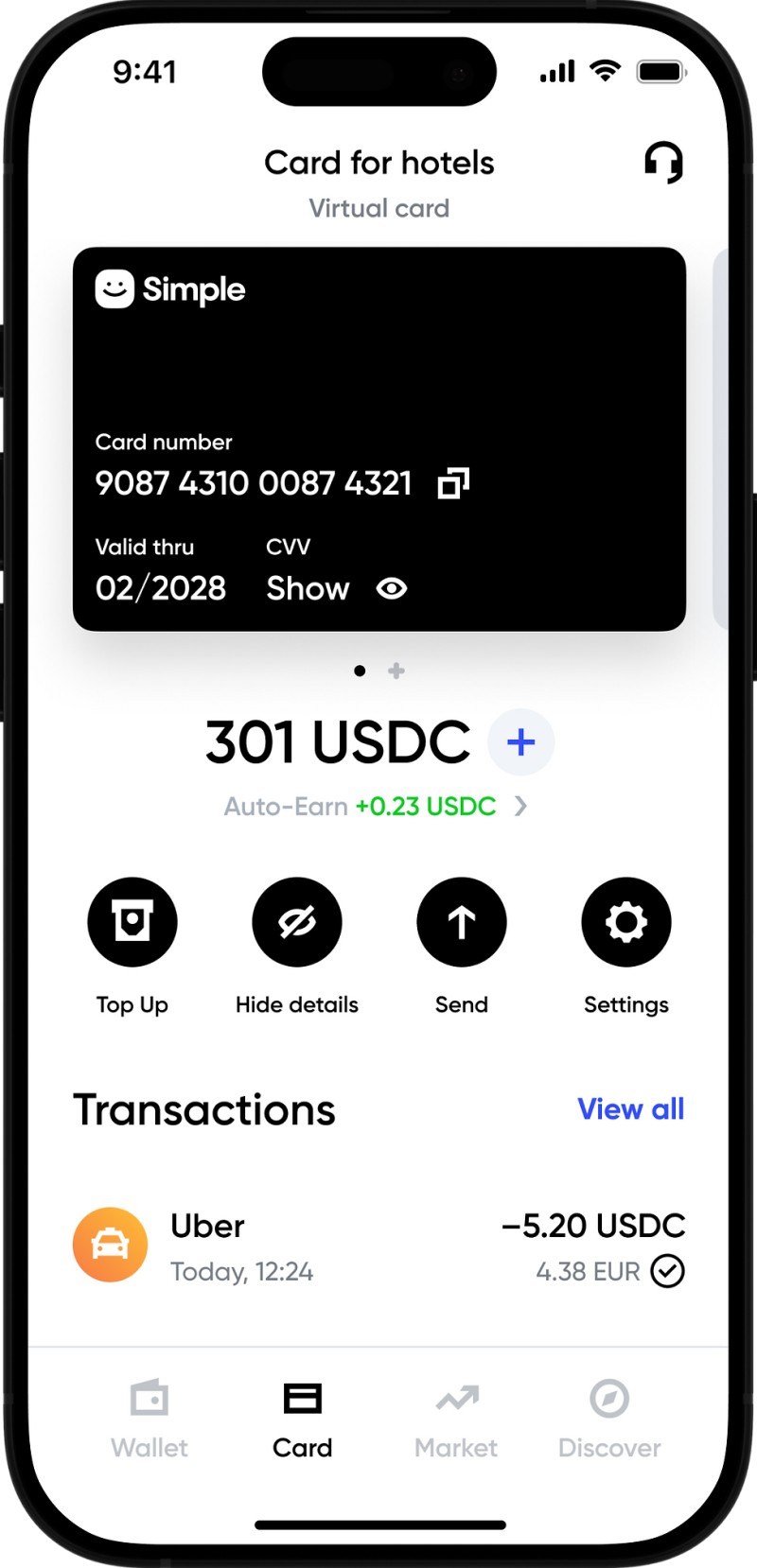
The case study identifies the following features:
Product features
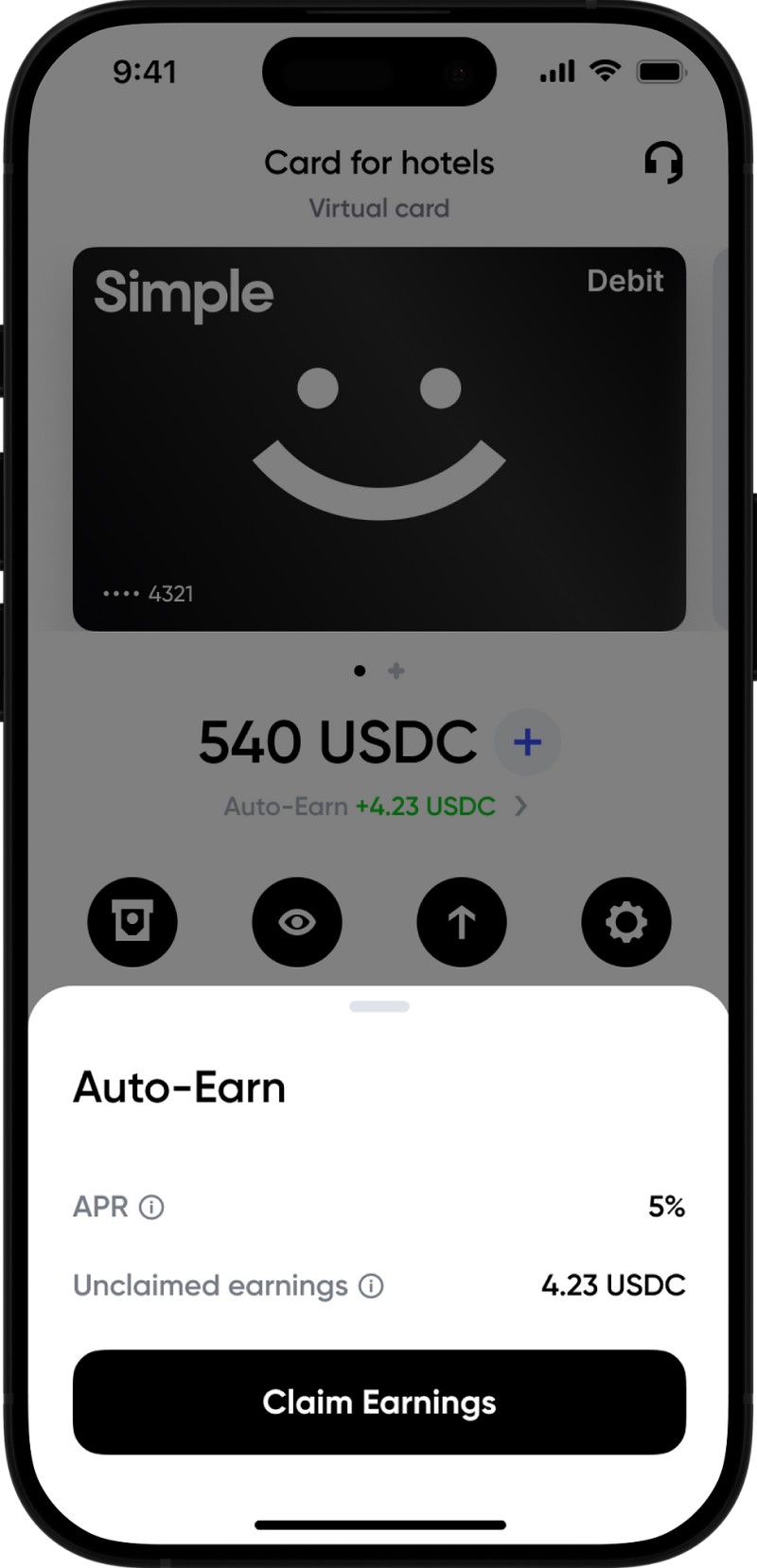
- Virtual card management with full card details, balance tracking, and instant activation.
- Multi-chain top-ups using USDC or USDT across Arbitrum, Base, Polygon, Ethereum, BSC, and Tron.
- One-tap funding.
- Real-time USDC-to-EUR conversion.
- Global merchant acceptance.
- Enterprise spending controls.
- Comprehensive transaction tracking and reporting.
- Automatic yield of 5% APR on card balances.
- One-tap yield claims.
### Reported Impact
The case study reports that the entire user base became ready for cards in weeks, with support across more than 130 countries. It says the infrastructure could scale from 2 million users toward 20 million users without the product having to be limited by the original infrastructure.
The product was described as expanding from a crypto wallet into a financial platform with:
Product expansion
- Cards.
- IBANs.
- Yield.
- One-to-one fiat-to-stablecoin conversion.
- Stablecoin push-to-card functionality.
- Cross-border payment rails.
- Transfers.
- Compliance-first architecture.
- Self-custody.
The case study characterizes the result as a combination of self-custody and real-world financial infrastructure rather than either custodial fintech or pure Web3.
"At Simple Wallet, we want to focus on building a product, not infrastructure. Wirex BaaS let us do exactly that, at exactly the speed we needed."
### Simple Wallet Executive Perspective
"Our partnership with Wirex has been instrumental in accelerating the next stage of Simple Wallet's growth. Building a scalable card program while preserving our self-custody architecture required more than infrastructure, it required alignment in vision and execution. Wirex delivered both. Together, we are creating a financial product that combines full asset control with seamless everyday usability, a balance that defines the future of digital finance."
Alex Emelian, CEO and Co-Founder, Simple Wallet
### Expansion Roadmap
The case study lists the following initiatives:
Expansion roadmap
- Geographic expansion into Latin America and Southeast Asia: in progress.
- Stable

Comments on “A Beginner's Guide to Choosing the Right Cryptocurrency E Wallet”
No comments yet. Be the first to share your thoughts.