
Step-by-Step Guide: How to Withdraw Funds from Coinbase Safely and Quickly
Withdrawing from Coinbase: What You Need to Know
If you're asking how do i withdraw from coinbase , you're not alone. It's one of those things that should be simple but comes with enough moving parts that people get stuck. Coinbase is a live cryptocurrency exchange where you can buy, sell, transfer, and store crypto. But getting your money out - whether to a bank account or your own wallet - has some wrinkles worth understanding before you hit that button.
The Basic Withdrawal to Bank or PayPal
The standard path: log in, go to the Assets page, pick the cryptocurrency you want to move, enter the amount, choose your linked bank account or PayPal, review the fees, and confirm. The funds usually show up in one to three business days, depending on your bank. That's the happy path. But there are a few things that can trip you up before you even get to the confirmation screen.
Your Balance Might Not Be What You Think It Is
This is the part that catches people off guard. Coinbase defines "Available Balance" as your total assets minus anything tied up in open orders and fees. If you have a limit order sitting on the books, that crypto is on hold. You can see the total value in your account, but the amount you can actually withdraw right now might be lower.
On Coinbase Advanced Trade and Coinbase Exchange, filled orders settle immediately. Once settled, you can withdraw those assets subject to daily withdrawal limits. Coinbase Prime works similarly - filled orders settle right after confirmation from the connected venue. But here's the thing: the trading rules don't publish a specific numerical daily withdrawal limit. They just say immediate withdrawal of all assets is "subject to the applicable limit." So you won't know the exact number until you hit it.
Fees: Review Before You Confirm
The instructions specifically tell you to review fees before confirming. There's no universal fee listed in the documentation. For crypto transfers from exchanges, you might face a flat exchange fee or a percentage-based fee - and that exchange fee is often higher than the actual network fee.
If you're using Advanced Trade or Coinbase Exchange before withdrawing, there are maker and taker fees. Maker fee for maker orders, taker fee for taker orders, calculated as a percentage of the order quantity in the quote asset. Fees vary between order books. Volume-based discounts exist based on a trailing 30-day period. Canceled orders don't get charged a cancellation fee, which is something at least.
A longer delay before withdrawing may reduce the relative cost when an exchange uses a flat fee, but keeping the coins on the exchange for longer also increases exposure to exchange custody and operational risks.
Moving Crypto to Your Own Wallet
This is a different process entirely. You need a destination address - and this is where self-custody starts. The crypto stays recorded at an address on the blockchain. Whoever controls the private keys for that address controls the coins.
Private keys need to be generated offline in a cryptographically secure way. A hardware wallet like a Trezor is built for this. The keys it creates have, as the documentation puts it, "no realistic chance of being generated again." Each exchange has its own interface quirks, so the steps can vary. The source material specifically points to withdrawal docs for Coinbase, Binance, Kraken, and Gemini as examples.
Creating a Receiving Address with Trezor Suite
If you're using a Trezor, the process goes: open the Bitcoin account in Trezor Suite, select Receive, then Show full address. The Trezor device displays the address on its own screen. Compare the address in the software with the one on the device. If they match, copy the address or use the QR code. This verification step matters - it confirms the destination matches what your hardware wallet actually generated, not what some compromised software might show you.
Generic Exchange Withdrawal Steps
For other exchanges, the general flow: open your account, find the withdrawals page (might be under transactions, balances, or somewhere else), select the coin, verify the correct network is selected, paste the address or scan the QR code, confirm, and complete any authentication.
Critical warning: for Bitcoin, do not send it as an ERC-20 token. Selecting the wrong network can send your assets to a different blockchain than your destination wallet expects. That money is likely gone.
When the Platform Freezes Withdrawals
Coinbase's rules give them broad authority to restrict platform activity during technical problems. They can temporarily disable deposits or withdrawals, cancel open orders, disable new orders, or enter "Cancel-Only Mode" where no orders fill but you can cancel existing ones. If web access to Advanced Trade or Exchange is down for five minutes or more, they may move to Cancel-Only Mode. The platform only returns to full operation after web access has been stable for at least five minutes and they determine it's safe.
These changes are announced through @CoinbaseSupport on X and at status.exchange.coinbase.com. Coinbase Prime has similar powers - they can restrict withdrawals if they determine an account is compromised or technical issues interfere with trading. They also schedule maintenance windows, announced at status.prime.coinbase.com.
Platform Actions That Can Block Your Withdrawal
- Temporary disable of deposits or withdrawals
- Cancellation of open orders
- Cancel-Only Mode (no new orders, no fills)
- Disabled sign-in or API access
- Disabled web or mobile interface access
The Custody Question: Why Withdraw at All?
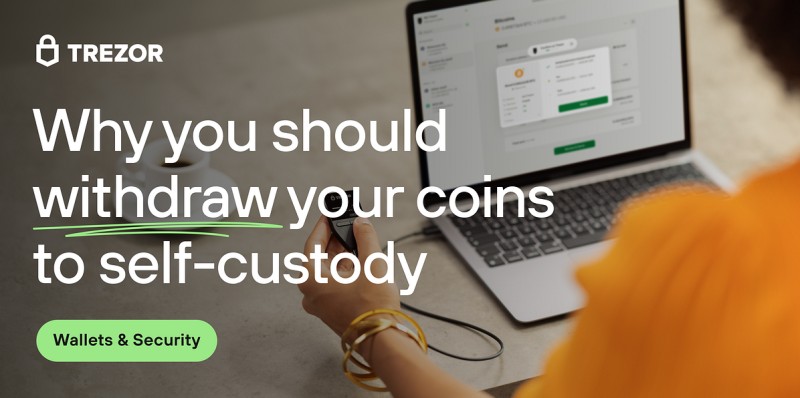
A Trezor Blog article from May 2022 framed this bluntly: Bitcoin on a centralized exchange isn't yours - it's a claim against the exchange. "At best, it's a promise that might be physically settled when you attempt to withdraw your coins." The article argued that security based on a third party holding keys is trust-based, contrasted with self-custody through offline private keys.
"Bitcoin held on a centralized exchange simply isn't yours; at best, it's a promise that might be physically settled when you attempt to withdraw your coins."
"your coins are never yours, unless you withdraw."
The article discussed Coinbase's bankruptcy disclosures - noting that while Coinbase stated client funds wouldn't be at risk in bankruptcy, it also disclosed deposits would likely be withheld during financial trouble. The interpretation: users might not recover coins if Coinbase failed, and recovery could take a long time even if assets were eventually returned. It cited Mt. Gox as an example - as of May 2022, client funds had been tied up in legal proceedings for more than eight years, with unclear recovery amounts and uncertainty about whether settlement would be in fiat or Bitcoin.
Bank Runs and Fractional Reserve Concerns
The article raised the possibility that a large number of simultaneous withdrawals could leave an exchange unable to return all customer assets - comparing it to a bank run under a fractional-reserve system. It argued users shouldn't assume an exchange holds enough coins to satisfy all withdrawals unless that assumption is demonstrated.
It characterized Bitcoin as "sovereign money" and argued the long-term question isn't just where you buy, but where you keep it after purchase. Long-term risk is high when a third party has sole control of the keys. Short-term custody risk may be lower and outweighed by convenience for some users - but that's a choice each person has to make consciously.
Alternatives: P2P and Direct Wallet Purchases
The Trezor article presented noncustodial acquisition methods as alternatives to leaving purchased assets on a custodial exchange. Peer-to-peer purchases can involve paying a seller directly in cash or arranging a bank transfer. This avoids the data-collection risks of an exchange's know-your-customer process. If a direct P2P connection isn't available, you can use a peer-to-peer cryptocurrency exchange.
The article also identifies a Trade menu in Trezor Suite, provided by Invity, that lets users compare providers and buy, sell, or exchange crypto without first holding the purchased asset on a custodial exchange.
Buying directly to a self-custodied wallet removes the need to hold the asset on a custodial exchange before transferring it - and avoids exchange withdrawal fees entirely. That's worth considering if your goal is to invest in cryptocurrency without the exchange layer.
What This Means for You
Withdrawing from Coinbase isn't complicated mechanically. The steps are documented. But the context matters: your available balance depends on order settlement, fees vary and aren't always transparent upfront, platform interruptions can freeze withdrawals without notice, and keeping funds on any exchange means trusting them with your keys.
If you're moving to a bank account, expect one to three business days. If you're moving to a hardware wallet, take the extra minute to verify the address on the device screen. And if you're just starting out, consider whether buying directly to your own wallet makes more sense than buying on an exchange and withdrawing later. The best exchange for crypto might be no exchange at all - depending on what you're trying to achieve.
Related Reading
If you're comparing platforms, you might look at a review of kraken exchange or research what is the most secure crypto exchange for your needs. Some people prefer a best app crypto trading experience on mobile, while others prioritize a cryptocurrency trading platform with advanced order types. There's also robinhood crypto currency if you're already in that ecosystem. And if you're new to the space entirely, understanding what is coinbase beyond just a withdrawal button helps frame the bigger picture.
The crypto exchange best suited for you depends on whether you prioritize convenience, fees, security, or control. Just know what you're signing up for - and what happens when you want to leave.

Comments on “Step-by-Step Guide: How to Withdraw Funds from Coinbase Safely and Quickly”
No comments yet. Be the first to share your thoughts.