
How the Bitcoin and Stock Market Move Together
Bitcoin and the stock market connection
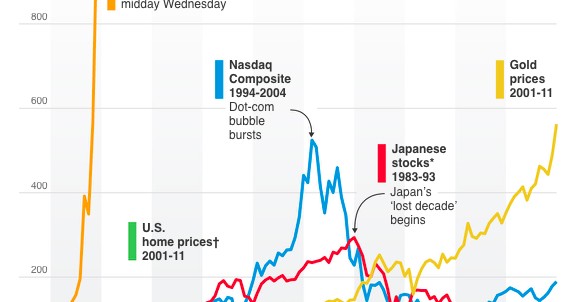
I’ve been watching the bit coin stock market dance for years. It’s messy, sometimes coordinated, sometimes not. The big picture: both are risk assets, and when the economy gets shaky they tend to move together. But there are plenty of times they diverge, and understanding why matters if you’re trying to make sense of your portfolio.

Shared risk-asset behavior during economic cycles
Back in 2022, Bitcoin lost about two-thirds of its value from the November 2021 peak. The total crypto market shed roughly $2 trillion. That downturn was called a crypto winter, and it looked a lot like the 2017–2018 bear market. The difference this time? Crypto prices moved in lockstep with tech stocks. Rising inflation, rate hikes, the war in Ukraine, and supply-chain chaos hit both markets at once. Regulatory uncertainty added extra pressure on crypto. The lesson: Bitcoin is no longer off in its own corner; it’s tied to the same macro forces that move the S&P 500 and the Nasdaq.
That doesn’t mean they’re glued together forever. Each cycle brings new players - Ethereum, DeFi, stablecoins, institutional derivatives - and each one changes the correlation. If you’re asking what crypto to invest in based solely on stock-market trends, you’re missing half the story.
A month when equities rallied while cryptocurrency fell
May 2026 gave a clear example of the link breaking down. U.S. stocks closed the month at record highs - Nasdaq up over 8%, S&P 500 up 5%. Meanwhile Bitcoin dropped about 4.5% for the month, Ether more than 11%. Stocks cheered signs of a Middle East peace deal, falling oil, and easing bond yields. Bitcoin didn’t join the party. It only perked up a bit when news of an Iran deal hit, but not enough to erase the monthly loss. That episode shows Bitcoin can react to the same geopolitical news as stocks, yet still march to its own drum because of crypto-specific supply, leverage, and market structure.

Crypto-related developments affecting individual stocks
Sometimes a crypto headline moves a stock even when Bitcoin itself is down. Two examples from that same period:
Stocks that moved on crypto news
- Robinhood shares jumped 10% in a day after the CFTC approved U.S.-regulated bitcoin perpetual futures on Kalshi and cleared a Coinbase affiliate for global options. The company also launched AI trading tools and a new kids’ investment account. All that happened while Bitcoin was posting a monthly loss.
- SoFi rose 7% after rolling out a dollar-backed stablecoin, SoFiUSD, to 15 million banking-app users. First U.S. national bank to do that on a public blockchain. The stock gained despite Bitcoin’s decline.
These moves remind me that crypto coin to invest research should include the companies building on-ramps, not just the coins themselves.
Institutional access and the growth of derivatives
Institutions have been getting more ways to touch Bitcoin without holding it. The first regulated Bitcoin derivatives appeared in 2017 via LedgerX. CBOE and CME followed with futures and options. The SEC kept rejecting ETF proposals, but the expectation was that an ETF would eventually arrive, bringing more capital, short-selling, and hedging tools. Fast forward: by 2026 the CFTC had approved perpetual futures on Kalshi and opened a path for Coinbase to offer global options. More access means tighter links to traditional markets, but also more leverage, automated liquidations, and procyclical trading that can amplify swings.
Our regulated, institutional-grade platform enables participants who were sitting on the sidelines, to enter the digital currency market.
That was Paul Chou of LedgerX in 2017. The infrastructure has only grown since.
Minsky’s framework for the cryptocurrency market
Lee Reiners, Ryan Clements, and Sean Semmler mapped the 2017 crypto boom to Hyman Minsky’s five-phase bubble model. It’s a useful lens, even if the timing never lines up perfectly.
Minsky’s five phases applied to crypto
- Displacement: distributed ledger technology sparks expectations of higher growth and profits.
- Boom: prices rise steadily, then outpace fundamental improvements. Venture capital pours in - from $14 million across seven DLT companies in 2013 to nearly $400 million across 75 companies a few years later.
- Euphoria: speculative frenzy. ICO funding exploded from $300 million to $3.5 billion in 2017. Celebrity endorsements, domain sales like Ethereum.com for $10 million, and stories of ordinary investors turning $1,000 into millions fuel the mania.
- Profit taking: sophisticated investors start exiting. Regulated derivatives and the prospect of an ETF make it easier to hedge or short.
- Panic: prices collapse. Leveraged players get margin-called, algorithmic trading accelerates the drop, and exchange outages (like Kraken’s in 2017) remove liquidity just when it’s needed most.
The authors didn’t predict when the break would come, only that the pattern matched. Bitcoin survived the Mt. Gox collapse, the Bitcoin Cash fork, China’s exchange ban, and Jamie Dimon calling it a fraud - each a near-death experience that didn’t end the boom. That resilience is part of why the debate still rages.
Conventional asset pricing and Bitcoin’s speculative premium
John Cochrane’s 2017 take starts with the basic pricing equation: price equals expected present value of dividends. Bitcoin pays no dividends. So holders must get a non-cash benefit (convenience yield), accept lower expected returns, or bet the price will keep rising - a rational bubble. Cochrane was skeptical of the rational-bubble story because it would eventually imply Bitcoin’s value exceeds all world wealth. He compared Bitcoin to cash: both have zero fundamental value but a convenience yield. People hold cash for transactions, tax avoidance, illicit activity. Bitcoin serves similar demands - avoiding capital controls, ransomware payments, moving money out of restrictive regimes. On top of that, speculative demand from traders who only care about short-term price moves adds fuel. High volatility, huge volume, short holding periods, restricted supply, limited substitutes, and short-selling constraints all intersect to create surges.
Cochrane also noted that substitutes - other cryptocurrencies, futures, private claims - take time to develop, so Bitcoin’s scarcity can support a high price for a while. He predicted stable-value cryptocurrencies pegged to a dollar would eventually become useful money, at least until high inflation or sovereign debt crises push people toward a non-government alternative.
Mining costs, fixed supply, forks, and substitutes
Bitcoin’s supply is capped at 21 million, but the circulating supply grows as miners produce new coins. Extraction costs rise as the remaining coins get harder to mine. Some folks try to calculate a rate of return that includes mining expense, treating Bitcoin like a mined commodity. The protocol’s 21-million limit is enforced by math, but it still depends on thousands of participants running the same software - a social consensus, not just code.
Forks like Bitcoin Cash and Bitcoin Gold looked like they created new value out of thin air. Critics said clones could dilute scarcity. Defenders argued brand, network effects, liquidity, developer community, and accumulated security spending make the original network far harder to replicate. A hypothetical “Foocoin” with 0.1% adoption and $50,000 attack cost isn’t a real substitute for Bitcoin’s hundreds of millions in security spending. So far, clones have mostly failed to gain traction.
Bitcoin’s value depended on the likelihood that another person would accept it later.
That’s the core of the “next buyer” argument: price rests on the belief that someone else will pay more tomorrow.
Bitcoin, dollars, and stocks as alternative stores of value
Michael Snoyman’s 2024 piece reframes the trade: buying Bitcoin with dollars is also selling dollars for Bitcoin. The denomination you choose reflects which asset you consider the real money. Quoting Bitcoin in dollars embeds a bias - it treats dollars as the stable unit. If you quote dollars in bitcoin (say, 20 micro-BTC per dollar), the decision logic flips. Snoyman moved from seeing Bitcoin as a speculative hedge to treating it as his preferred long-term store of value, keeping dollars only for near-term expenses. His three-part framework:
Three purposes for money
- Short-term liquidity: rent, groceries, emergency fund.
- Long-term storage: assets expected to preserve purchasing power - Bitcoin, in his view, because of the fixed 21 million supply.
- Speculative investments: bets on assets expected to outperform the safe asset over a specific period.
He acknowledges Bitcoin could go to zero, but he weights the supply mechanism more than past performance. Stocks, he argues, rely heavily on the expectation that someone else will pay more later - not so different from the speculative demand Cochrane described. The key difference: Bitcoin’s scarcity is coded; the stock market’s scarcity depends on continuous money printing flowing into equities.
Crypto cycles, leverage, and institutional failures
The 2022 downturn exposed a web of leverage that wasn’t visible in earlier cycles. The algorithmic stablecoin Terra collapsed, wiping out an estimated $50 billion and triggering a cascade. Three Arrows Capital, heavily exposed to Terra’s sister token Luna, failed a margin call from BlockFi, then defaulted on a $660 million loan from Voyager Digital. Both went bankrupt. Celsius followed. The sequence showed how a stablecoin failure, lending exposure, margin calls, and debt defaults can reinforce each other. Earlier winters (2017–2018) weeded out weak projects; the 2022 version did the same but with far more interconnected leverage.
Regulatory actions also move markets. South Korea’s 2018 real-name bank-account rule caused an immediate selloff, yet it also added legitimacy. The SEC’s 2017 DAO ruling, China and South Korea’s ICO bans, and the push for CFTC-regulated futures all illustrate the gap between enthusiasm and legal clarity. Meanwhile, traditional banks like JPMorgan launched their own digital coins, while Warren Buffett called Bitcoin “rat poison squared.” Institutional adoption and rejection coexist.
Currency, investment asset, and medium of exchange
The 2017 discussion questioned whether Bitcoin is a currency at all. High volatility and potential deflation make it awkward for daily payments, even as it grows as a financial asset. Some argued reliable money should hold value against goods and services - like silver quarters in 1964 preserving purchasing power better than the face value. Bitcoin’s proof-of-work tries to mimic that labor input, but without a barrier to substitution, the argument goes, its value could fail. Others pointed out Bitcoin already functions as a medium of exchange; the puzzle is why its exchange value swings so wildly. The equation of exchange was offered as an analytical tool. Gresham’s Law was invoked: a unit held for speculation might be spent rather than hoarded when its purchasing role diverges from its investment role.
Bitcoin forks could function as a form of dividend.
One respondent noted long-term holders accumulate Bitcoin as savings, use it as a gateway to other cryptoassets, and eventually exchange it for real-world goods. That view counters the idea that holders have no long-term interest.
Contrasting explanations for Bitcoin’s price
The source material gives several distinct, conflicting stories:
Four lenses on Bitcoin’s price
- Cochrane (2017): fiat money with convenience yield, speculative demand, restricted supply, limited substitutes, short-selling constraints. Volatile, possibly worthless long-term, unsuitable for taxable investors.
- Snoyman (2024): fixed supply and resistance to monetary expansion as core monetary properties. Dollars for spending, Bitcoin for long-term storage. Stocks more dependent on resale expectations.
- Reiners, Clements, Semmler (2017): rapid DLT investment, media hype, ICO explosion, institutional access, and price growth signal euphoria phase of a bubble. Technology remains important; timing of the break unpredictable.
- 2022 cycle analysis: Bitcoin’s decline part of a recurring risk-asset cycle amplified by inflation, rate hikes, geopolitical conflict, regulatory uncertainty, leveraged lending, stablecoin failure, and centralized-custodian failures. Recoveries happen, but highly leveraged projects face greater risk.
These positions disagree on long-term value, durability of the 21-million cap, role of network effects, usefulness of traditional valuation models, likelihood of a bubble, and whether Bitcoin is money or a speculative asset. The debate isn’t settled, and it probably won’t be for a long time.
What this means for your watchlist
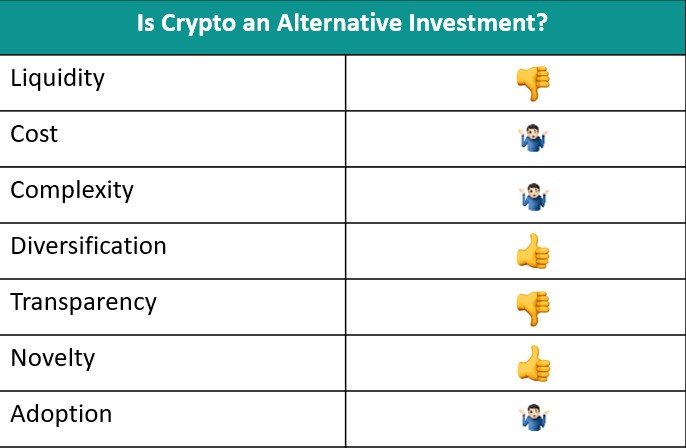
If you’re trying to figure out is crypto a good investment or what cryptocurrency is best to invest in , the answer depends on which framework you trust. The stock-market correlation is real but not permanent. Company-specific crypto news can move equities independently. Institutional derivatives add both liquidity and leverage. Mining economics, forks, and substitute coins shape supply dynamics. And the fundamental disagreement among smart analysts means there’s no consensus model you can just plug into.
My take: keep enough cash for the bills, size your speculative bets to what you can afford to lose, and if you believe in the scarcity mechanism, treat Bitcoin as a long-term holding - not a trade. Don’t chase every swing. And if you’re looking for how to invest in cryptocurrencies or how to invest to crypto , start by understanding the conflicting stories rather than picking a coin based on last week’s price.
The market of cryptocurrency keeps evolving
New products like etf of cryptocurrencies and regulated perpetual futures change the plumbing. Stablecoins from traditional banks like SoFiUSD bridge the gap between old and new rails. The market of cryptocurrency is bigger, more connected, and more complex than it was in 2017. That doesn’t make it easier to predict - just means there are more moving parts to watch.
If you’re wondering best to buy cryptocurrency or crypto currency how to invest , remember: the only honest answer is that nobody knows for sure. The smartest move is to learn the mechanics, understand the competing narratives, and decide how much uncertainty you can stomach.

Comments on “How the Bitcoin and Stock Market Move Together”
No comments yet. Be the first to share your thoughts.