
How to Find Your Best Trading Bot Strategies (and Dodge Scams)
Best Trading Bot Strategies for Crypto Beginners
I keep seeing folks ask what the best trading bot strategies are when they first dip into crypto. The short answer is boring but true: the best setup is the one that fits the market you are in. A fancy bot in the wrong market will just lose you money slow and steady. This post walks through the main types and how to not get scammed while picking one.
A trading crypto bot is just a piece of software that buys and sells based on rules you or someone else set. It talks to an exchange through an API and watches the market all day and night. The point is to catch moves fast and without the fear or greed that messes up human trades.

On some exchanges the bots run right inside the site. You can look at live bots other people run, see their returns, and copy them with one click. That is a neat way to learn because you see real numbers, not just talk. But hey, do not skip the part where you check if those numbers make sense.
Why Use a Bot at All
The big draw is that bots do not get tired and do not panic. They follow the rules exactly as written. They can also test a plan on old price data before you risk a cent. That backtest step is worth more than people think.
Bots are not magic though. A bot is only as good as the plan it follows. If the plan is bad, the bot will just lose money faster and at 3am when you are asleep. For a beginner, just breaking even at first is a fine goal.
A bot is only as good as the strategy it follows, and the strategy must match the user’s capital, objectives, and risk tolerance.
Grid Trading Bots
A grid bot puts buy and sell orders at set price steps inside a range. If price bounces between those steps, the bot grabs a little profit each time it bounces. Spot grid has no leverage so no liquidation risk. Futures grid uses leverage and can profit both up and down.
Grid works best when price moves inside a band over and over. If price breaks out and runs, the bot may just sit there with an open order that never fills. So picking the range matters more than hitting go. General data shows 0.5 to 3 percent a month in good ranging markets.

Grid bot quick facts
- Buys low and sells high inside a set range
- Needs price to keep moving inside that range
- Spot version has no liquidation risk
- Futures version uses leverage and can be stopped out
DCA Bots and Martingale
DCA means dollar-cost averaging. The bot buys a fixed amount at regular times no matter the price. Advanced DCA buys more when price drops by a set percent. That is the dip buying many folks talk about. Spot DCA just holds the coin. Futures DCA scales up size on each drop and can hurt bad if price never comes back.
A good DCA plan says the base order size, how many drops it will buy, max money in, take profit, and stop loss. It is not buy forever. You need a line where you say no more. For crypto trading for beginners this part is the one that gets skipped and then regret shows up.
DCA is not “buy forever” but structured entry management.
Combo Bots Mix Grid and DCA
Combo bots run grid and DCA together. They may fit when the market both swings and drifts a direction. For BTC a combo can work if you get futures risk. For ETH it fits active moves. For SOL you should test it small because the volatility can flip on you fast.
The rule of thumb is simple. Sideways repeat moves means grid. Pullbacks or staged entry means DCA. Volatile directional move means combo. Long term accumulation means DCA logic. Pick by the market, not by the coin hype.
Other Bot Types You Might See
Funding rate arbitrage is a delta-neutral play. It holds a spot long and a futures short of same size. Profit comes from the funding fee paid between longs and shorts. In high funding times this can pay well and has near zero price risk. Normal funding gives around 3 to 11 percent a year.
Signal bots copy outside calls and fire trades fast. Market making bots post buys and sells near price and eat the spread. Scalping bots do tons of tiny trades. Trend bots ride a direction. Mean reversion bots buy low sell high versus the average. Each fits a certain market state.
Less common bot styles
- Funding rate arbitrage - hedge long and short for fee profit
- Signal trading - auto run someone else's alert
- Market making - provide liquidity for spread
- Mean reversion - bet price returns to average
Match Strategy to Coin: BTC, ETH, SOL
BTC is the easy one to learn on. If it moves sideways a grid may fit. If it corrects and you want slow exposure DCA makes sense. If it is wild and you know futures risk a combo test can be ok. The main risk is the range breaking.
ETH reacts to broad crypto mood and its own news like staking or ETFs. It can do grid or DCA. Ask if the market is really sideways before grid. SOL is faster and more violent. Smaller base order, keep cash for averaging, set invalidation, review after big moves. Beginners better make SOL a second or third bot test.
Best bot strategy is not most aggressive; it matches coin, market condition, and capital.
Real Performance From Live Bots
Live market data shows big range in results. One spot grid on a meme coin ran over 600 days and showed 272 percent total return. That is outlier stuff on a wild coin. A DOGE grid showed tight spread and good fill because DOGE is super liquid.
A BTC futures grid with two x leverage showed estimated APR from 45 to 95 percent depending grid width. Wider grid took less per cycle but survived a breakout. Narrow grid got stopped when price popped. ETH DCA long closed 18 to 35 percent after buying the dip and averaging down.
What the numbers tell us
- High volatility coins can show huge APR but also huge risk
- Liquid coins fill grid orders without much slip
- Wide grid is safer than narrow in breakout markets
- Funding arbitrage can pay steady in high funding times
Start a Bot Without Losing Your Shirt
Most sites let you log in, pick a bot type, look at its history, and copy it with your own money. You can pause or stop anytime from your dashboard. Some give a free trial with demo mode. Use it. Test BTC grid, then ETH DCA, then SOL tight vs wide range. When picking a best trading bot crypto setup do not choose by popular coin. Choose by fit.
If you want to build your own, define the market, time frame, entry, exit, size, and risk rules. Backtest on old data. Then paper trade for a month or two. Then go live small. A simple cross of averages with a trailing stop is a real plan people use.
Test strategy before launching to expand odds of profit.
Watch Out for Scams and Black Boxes
This part is important, pay attention. Lots of listicles push the best trading bot strategies from platforms that show zero proof of real trades. One regulator said flat out that AI will not turn bots into money machines. A fake bot Ponzi took over a billion in bitcoin from thousands of people using demo account tricks.
A 3commas trading bot type product may look slick and a 3commas trading bot review might sound calm but ask one thing: can you read the strategy before it trades? Many new platforms do not let you. If you cannot see the logic, it is a black box and you are the test dummy.
Red flags in bot lists
- No live trade proof or only press releases
- Cannot read the strategy before it trades
- Promises of huge daily gains with no risk talk
- Copy-paste bots with no way to change settings
Mirror Trading International stole over $1.7 billion in bitcoin from 23,000 people using fake bot Ponzi on demo accounts.
Where to Find Honest Bots
Some platforms show community strategies in plain English with user names and live diaries. You can see losses right on the page before you put money in. That is the opposite of black box. One site had strategies down 40 or 59 percent shown next to the prompt that caused it.
If you want automated trading bots free to learn, look for demo mode or a free plan that lets you run a few bots small. Bitsgap lets users run up to three combo bots on a free plan to learn before more risk. Just treat free as learning not winning.
A trading bot website should show real stats like run time, total return, and price range. If it only shows estimated APR with no run time, be careful. Short run bots can show huge APR from a few wild days that will not last.
AI Bots and Custom Builds
AI bots use tuned parameter sets. Lead bots are top strategies from verified traders you can copy. Some places let you write a plan in plain English and an AI runs it with a public diary of wins and losses. That beats a closed box with no view inside.
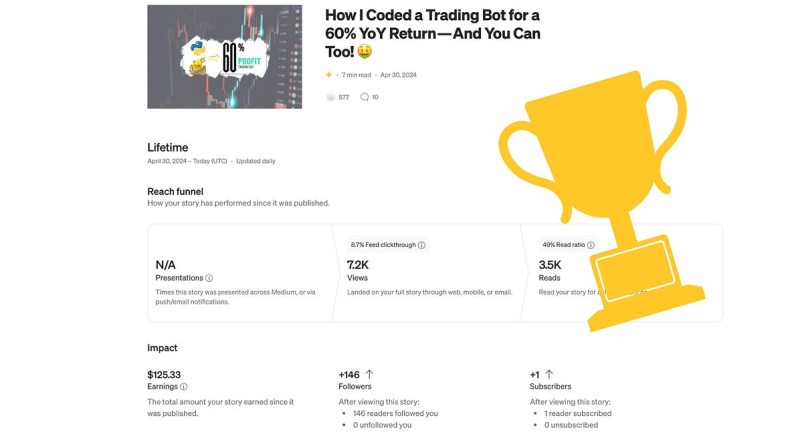
For ai trading bots reviews the key question is same as always: do they show the loss too? A blog post about a simple average plus band strategy showed a 60 percent backtest year but also a 50 percent drawdown and shared the code. That honesty is what you want.
Commercial bot limitations: limited customization, black-box decision making, one-size-fits-all, overcrowding effect reducing effectiveness.
Pick a Platform That Fits You
When you ask which platform is best for crypto trading the answer depends on you. If you trade stocks too and like Robinhood, note a trading bot for robinhood is not the same as crypto native bots and may not exist as a full bot market. Crypto exchanges with bot marketplaces show live history and one click copy.
Look for clear fees, stop controls, and a way to see the full price range and run time. No code should be needed to start. If you later want control, learn to write a simple plan with help from free tools. But copy without understanding is just a black box with extra steps.
Beginner Checklist Before You Hit Go
Before any bot on BTC ETH or SOL answer these. Is the coin sideways falling or trending. Does grid DCA or combo match that. What is max money for this. What if price leaves the range. How much cash stays out. Did you test in demo.
Questions to answer first
- Is the coin moving sideways, falling, or trending?
- Does GRID, DCA, or COMBO match that condition?
- What is maximum investment for this setup?
- What happens if price leaves expected range?
- How much capital stays outside the bot?
- Have I tested setup in demo mode?
If cannot answer, bot not ready.
Risk Management Is Not Optional
Set a max drawdown with auto shutoff. Size by volatility not by gut. Do not put all cash in one bot. Watch it sometimes. Do not tweak the plan every time it dips unless the market changed for real.
Avoid over tuning to past data. Fees and slip matter. A plan that looks great on old data can die on live spread. Keep some dry powder out of the bot so a range break does not end you.
My Take on the Best Trading Bot Strategies
The best trading bot strategies are not the ones with the biggest APR on a three day run. They are the ones you understand and that fit the market in front of you. Grid in ranges. DCA on pullbacks. Combo when both. Arbitrage when funding is hot.
Skip the black box lists with no proof. Read the strategy. See the losses. Test small. BTC first then ETH then SOL. Slow and clear beats fast and blind. That is the whole post really.


Comments on “How to Find Your Best Trading Bot Strategies (and Dodge Scams)”
No comments yet. Be the first to share your thoughts.