
How to Choose Crypto Trading Bot Settings and Build a Profitable Setup
What a Crypto Trading Bot Does
A crypto trading bot is a software program that executes cryptocurrency trades according to predefined rules, technical indicators, market data, or an adaptive model. A rule-based bot can buy, sell, hold, rebalance, or average into positions according to its configuration. More advanced systems use machine learning, sentiment analysis, or reinforcement learning to adjust decisions as market conditions change.
Crypto markets run continuously, including weekends and holidays. Automation lets a strategy monitor prices and execute orders without requiring a person to sit at a screen. It can also enforce predefined risk rules, reduce emotional reactions, process large volumes of market data, and react faster than manual execution.
Automation does not determine whether a strategy is sound. A bot can automate execution, but it cannot repair a weak configuration. The strategy, market assumptions, capital allocation, order logic, exits, data quality, and risk controls still come from the user.
Rule-Based Bots vs AI Bots
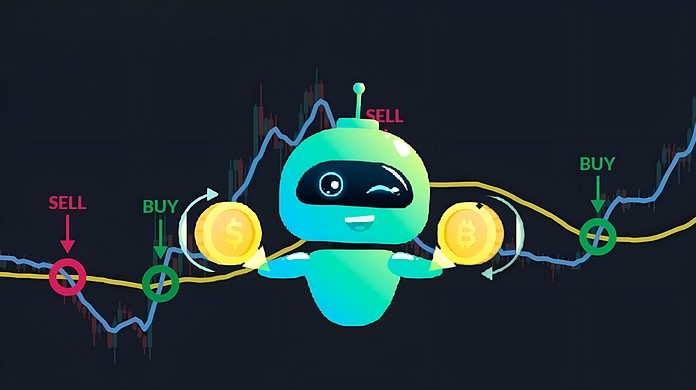
A conventional crypto bot follows rules supplied by the trader. Examples include buying when an EMA crosses a Bollinger Band, placing a fixed amount after a price decline, or exiting when a range boundary breaks. The result depends directly on the coded logic and configuration.
An AI or machine-learning bot uses algorithms to identify patterns in historical or real-time data. Depending on the model, it may adjust its decisions as it encounters new scenarios. AI systems may process price, volume, market depth, news, social media, and other inputs at the same time.
When reading reviews of AI bots , look for disclosed drawdowns and risk limits, not just headline returns. The distinction matters because automation and learning are separate. A rule-based bot can be automated without being adaptive. A machine-learning or reinforcement-learning system can adapt while still requiring data validation, execution safeguards, and risk controls.
Reported AI capabilities
- Predictive analytics for market trends
- Processing of large data volumes
- Pattern recognition across multiple timeframes
- Natural-language processing of news and social-media sentiment
- Adaptive decision-making
- Automated parameter or strategy updates
Grid Bots and DCA Bots
A grid bot places repeated buy and sell orders at predetermined price levels. It is designed for a market that is moving within a defined range. Repeated movement between the levels allows the bot to buy lower and sell higher within that zone.
A DCA bot purchases a fixed amount at scheduled intervals or after specified price movements. It is intended to build or maintain exposure over time rather than predict one exact entry point.
Grid bot primary settings
- Lower and upper price boundaries
- Number of grid levels
- Distance between levels, or grid step
- Total investment
- Order size
- Stop loss or invalidation rule
- Take profit or cycle completion rule
DCA bot settings
- Total maximum investment
- Order amount
- Time interval or drawdown trigger
- DCA step
- Number of orders
- Reserve capital
- Stop loss
- Take profit
Loop Bots, Combo Bots, and Futures
A loop bot trades a selected spot asset through a defined cycle, such as buying one asset, exchanging it for another, and eventually returning to the starting asset. The configured asset, cycle logic, investment, and exit conditions are central to this type.
A combo bot can use futures logic and can therefore create leverage and liquidation risk. Its risk settings need to account for the total exposure created by the bot, not just the capital committed to one order. A stop loss is especially relevant to futures strategies because adverse movement can develop quickly.
Trend-Following, Arbitrage, and Market-Making
Trend-following bots use historical prices and indicators such as moving averages or momentum measures to identify upward or downward trends. They can buy during an upward trend and sell or reduce exposure during a downward trend. They are generally described as more suitable for clear directional markets than for choppy or sideways conditions.
Arbitrage bots search for different prices for the same asset across exchanges or trading venues. A simple example places Bitcoin at $93,000 on Exchange A and $93,200 on Exchange B. An arbitrage bot could buy on Exchange A and sell on Exchange B at the same time to target the $200 difference per Bitcoin before fees and execution costs.
Market-making bots place orders on both sides of the market to provide liquidity and earn the bid-ask spread. Market making carries inventory risk. Prices can move before both orders are filled, leaving the bot long or short. Spread changes, latency, queue position, adverse selection, and exchange rules also affect results.

Core Settings: Price Range and Investment
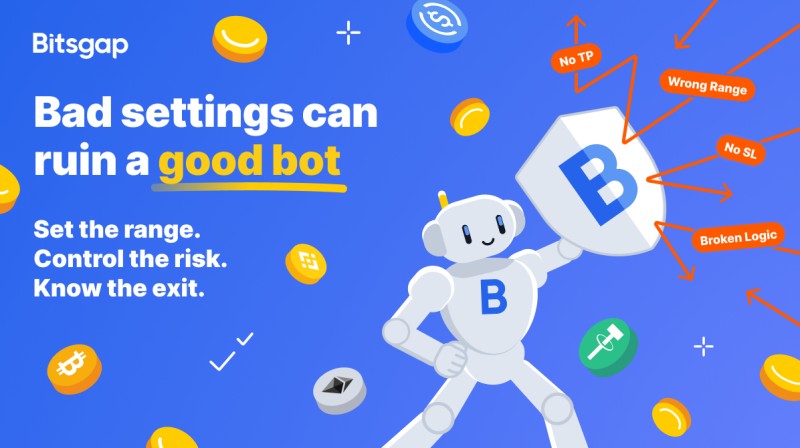
The core configuration consists of price range, total investment, order size, grid or DCA step, stop loss, take profit, demo testing, backtesting, and maximum exposure or other risk limits.
The price range defines where the bot is allowed to trade. It is especially important for a grid bot because the grid logic depends on price movement within a selected zone. A range that is too narrow may stop functioning when the market leaves that area. A range that is too wide can divide capital across too many levels, leaving less capital at each level and potentially placing more distance between entries and exits.
A useful range should be based on recent support, recent resistance, current volatility, asset liquidity, current market direction, whether the asset is ranging or breaking out, and the recent behavior of the selected exchange. For example, if Bitcoin has moved between $60,000 and $68,000 for several days, a trader might consider a grid inside that area because the market has visible boundaries. If Bitcoin breaks above $68,000 and continues higher, the old range may no longer match the market.
Order Size, Grid Step, and DCA Step
Order size determines how much capital each trade uses. Smaller orders can spread capital across more trades. Larger orders create stronger exposure and may increase the effect of each price move, favorable or unfavorable.
The step is the distance between orders. For a grid bot, the grid step controls the distance between buy and sell levels. For a DCA bot, the DCA step controls when the next averaging order may be placed. If the step is too small, orders may trigger too frequently and fees can accumulate rapidly. If the step is too large, the bot may miss useful movement within the range.
Step selection should reflect current volatility, the width of the trading range, expected drawdown, asset liquidity, trading fees, and the desired reaction to short-term noise. A step copied from another trader may not work with a different balance, asset, exchange, volatility level, or risk profile.
Stop Loss and Take Profit
A stop loss is a rule for exiting or reducing exposure when the original strategy is no longer valid. It is not an indication that the strategy has failed. It defines the condition under which the trader no longer wants to remain exposed.
A stop-loss rule is relevant when the market breaks the planned range, the asset moves against the strategy, the bot uses futures or leverage, the trader wants to limit unlimited downside, or there is a risk of liquidation. Stop-loss configuration should include the stop price or percentage, market structure that would invalidate the setup, volatility conditions, liquidation risk, and whether the bot closes the entire position or only part of it.
A take-profit rule defines when the bot should close, reduce, or lock a position after reaching a target. The purpose of take profit is not to identify the absolute top of a move. It is to follow a defined exit plan. A fixed take profit can be compared with a dynamic trailing take profit that adjusts as the market moves in the bot's favor.
Demo Trading and Backtesting
No setting should be launched blindly because it appears logical on paper. Market behavior can differ from the expected conditions. Demo trading can be used to observe whether the range is realistic, whether orders trigger too often or too rarely, whether the investment is sufficient, whether the bot responds as expected, whether the strategy is understandable, and whether the trader would be comfortable running it with real funds.
Some platforms offer free automated bots for testing, but subscription pricing and advertised user totals are separate from the strategy's actual performance. Backtesting evaluates how a setup would have behaved under historical conditions. It can reveal weak assumptions, but it does not predict future performance. A backtest should be combined with demo testing, current market analysis, and risk controls.
Pre-Launch Configuration Check
Before a live launch, verify each of the following: the current market condition is clear, the bot type matches that condition, the price range is based on market structure, the investment size keeps one setup from overexposing the account, the order size fits the account and asset, the grid or DCA step reflects volatility, reserve capital is available if the strategy requires additional orders, stop loss or another invalidation rule is defined, futures liquidation risk is understood, take profit or another exit rule is planned, the trading pair supports adequate liquidity and the selected exchange, demo behavior has been reviewed, a backtest has been inspected, the historical test covers more than one market condition, security and API-key controls are active, and the trader knows how the bot will be stopped or reviewed.
Common configuration mistakes
- Choosing a range without examining the chart
- Using most of the available balance in one setup
- Ignoring stop loss
- Copying another trader's settings without adjusting for the asset, exchange, balance, or risk tolerance
- Launching without demo testing
- Skipping backtesting
- Changing settings too frequently
- Choosing the bot before defining the strategy
- Failing to account for fees, slippage, or reserve capital
- Running a futures bot without understanding leverage and liquidation
- Allowing a bot to continue after its market assumptions have changed
Monitoring and Human Oversight
A bot can automate routine decisions, but ongoing monitoring remains necessary. Dashboards can show open positions, realized and unrealized results, current drawdown, exposure, order activity, and configuration changes. Alerts can report execution failures, price boundaries, stop-loss events, take-profit events, connectivity problems, and abnormal exposure.
Automation can reduce panic selling, fear of missing out, and impulsive entries, but it can also encourage excessive reliance on software. A trader should regularly inspect performance, update software, review market alignment, and adjust or stop a setup when its assumptions no longer apply.

Selecting a Bot, Platform, and Strategy
A bot should be selected by matching its capabilities to the intended strategy, assets, exchange, risk limits, and level of technical experience. Important platform considerations include available strategies, supported exchanges, supported assets and trading pairs, custom price ranges and order steps, stop-loss and take-profit controls, maximum investment and exposure settings, demo and backtesting tools, API-key storage, two-factor authentication, security standards and update history, fees, subscriptions, revenue-sharing models, customer support, documentation and educational resources, performance dashboards, community and developer activity, and user reviews and demonstrated history.
Higher return does not necessarily mean lower risk. Strategy fit is more important than a headline performance number. Beginner-friendly systems may emphasize intuitive interfaces and support. More advanced systems may allow custom code, APIs, reinforcement learning, or multi-exchange management. Advanced systems can also introduce more technical and operational risks.
If you are looking for the best crypto bot , start with platforms that let you test settings in demo mode before committing real funds. A good bot website should be transparent about fees, supported exchanges, and security practices. Subscription pricing and advertised user totals are separate from the strategy's actual performance.
Building a Custom Crypto Trading Bot
A custom bot is appropriate when the strategy, data, execution logic, or infrastructure requires more control than a hosted platform provides. A comprehensive development guide describes the process as a combination of market understanding, programming, exchange integration, testing, and deployment.
Begin by defining markets to trade, exchanges to connect, timeframe, entry conditions, exit conditions, order size, capital limits, indicators, data sources, position-management rules, backtesting period, and deployment environment. Popular technical indicators include moving averages, RSI, Bollinger Bands, MACD, momentum indicators, support and resistance, Fibonacci retracement, and candlestick-recognition patterns.
Exchanges named in development material include Binance, Kraken, Coinbase, and Coinbase Pro. Programming languages commonly used for crypto bots include Python, JavaScript, and Node.js. The choice should be supported by the exchange, strategy, available libraries, development skill, hosting environment, and maintenance requirements.
Architecture, API Keys, and Testing
The bot architecture should define how data moves from an exchange to the decision engine and then back to the exchange. A structured design can include a market-data collector, exchange WebSocket or REST connection, normalized data store, indicator or model engine, strategy or decision layer, risk-management layer, order-management system, trade database, portfolio and performance monitor, alert system, frontend dashboard, and backend services.
An API key allows the bot to read account or market information and place orders. Because it grants access to a trading account, it requires attention to access control and security. Security measures include restricting API permissions, securing storage of API credentials, using two-factor authentication for account access, maintaining reliable backups and recovery procedures, reviewing connected applications, testing order permissions and sandbox functionality, and avoiding unrestricted access when the bot only needs a narrower permission set.
The bot must connect to the API of the selected exchange or exchanges. Integration involves subscribing to market-data channels, fetching account balances, validating trading pairs, submitting order requests, tracking order status, receiving execution updates, handling minimum order sizes, price precision, rate limits, and rejected orders. If you want a bot for Robinhood , check whether the platform supports that exchange's API before committing funds. A multi-exchange bot must also account for different APIs, balances, fees, order books, timestamps, and inventory.
Frontend, Deployment, and Emergency Controls
A user interface can include bot status, current positions, open orders, realized and unrealized profit or loss, current drawdown, balance and capital allocation, price and indicator charts, sentiment inputs, recent trade history, alerts and notifications, start, stop, and emergency controls, parameter editing, and backtest results. Clear controls and alerts are important because a trader needs to understand what the bot is doing and intervene when conditions are not as expected.
After testing, the bot can be deployed on a server or cloud instance. The deployment needs a stable runtime environment, automatic restart capability, secure configuration storage, monitoring and health checks, logs, reliable network connectivity, version control, backup procedures, a kill switch or emergency shutdown, and access to deployment alerts.
Market Data for Crypto Trading Bots
A bot can use several forms of market data: candlestick or OHLC data, trades, quotes including bid and ask, order-book snapshots, order-book updates, market depth, volume, funding rates where applicable, technical indicators, and news and social-media sentiment.
OHLC candlesticks aggregate many trades into a fixed time or price interval. This reduces data size but removes much of the detailed sequence of bids, asks, trades, and order-book changes. Quote-level data can preserve bid and ask prices, bid and ask sizes, exchange timestamp, ingestion timestamp, individual trades, best bid and best ask changes, L2 or L3 order-book updates, and changes in market depth.
Quote-level data can improve a simulation in four ways: state fidelity, where bid-ask spread, depth, and quote changes can be used directly as model inputs; causality and transitions, where order actions can be placed in a more realistic sequence; distribution shifts, where historical periods with changing volatility, crashes, and liquidity conditions can be represented rather than smoothed into candles; and reward shaping and risk limits, where exact quote changes can support slippage penalties, safety bands, and execution constraints.
Reinforcement Learning and Data Requirements
Reinforcement learning is a branch of machine learning in which an agent learns through trial, error, actions, and rewards. In a crypto trading system, the agent can observe conditions such as quotes, spreads, order-book depth, or indicators and learn actions such as buying, selling, reducing exposure, or remaining flat.
A system that trains on Bitcoin data from 2019 through 2024 needs comprehensive exchange and pair coverage, quotes and order-book data in chronological order, correct alignment between trades, quotes, and order-book updates, exchange and receipt timestamps, consistent symbol normalization, storage and retrieval for terabytes of quote data, deterministic replay, gap and duplicate detection, and protection from retrospective data leakage.
The source argues that coarse OHLC data can hide short-lived moves and rare conditions that matter to an adaptive model. A recurring failure mode is a model that performs well on training data but poorly on validation or live data. One example described DQN agents using Bitcoin candlesticks with around 100,000 parameters and weeks of training that still performed well in training but poorly in validation or live use.
"RL works in Atari because the world's rules don't change. Bitcoin does."
Historical Market Regimes and Training Practices
An article described the 2019-2024 period as including several distinct Bitcoin environments: 2019 post-bear movement with thin liquidity and a calm market state; 2021 euphoria with expanding spreads and strong retail participation; 2022 institutional exits, market collapse, and fragmented depth; and 2023-2024 recovery with developing stability and the return of algorithmic liquidity.
Training only on a calm bull market can leave a model unprepared for a liquidity vacuum or a rapid volatility increase. The objective is to build a market memory containing calm, expansion, panic, collapse, and recovery rather than allowing the model to learn one market behavior as if it were universal.
A quote-level reinforcement-learning process can include feeding the model quotes, trades, and order-book states; including bull, bear, range, shock, and recovery periods; using L2 or L3 book data to model execution and market impact; penalizing slippage; applying safety bands and position limits; training for resilient behavior rather than profit alone; guarding against overfitting; validating outside the training period; comparing replay behavior with live data; and monitoring changes after deployment.
Custom Bot Case Studies
The OnePercent Blog describes itself as an experiment in cryptocurrency bot trading. Its archive contains several custom Python and 3Commas projects . The post titles and descriptions report performance figures, but they do not provide a complete audited methodology in the index material.
A March 2022 post described a Python script inspired by videos about following a large Bitcoin wallet. The stated purpose was to identify when a large wallet might make a substantial move. Because a trader would need to act immediately, the script was designed to provide an alert rather than rely on checking the wallet later.
A January 2022 post reported that a new automated script for triggering 3Commas bots returned 35% in 15 days. ADX is identified in the title as the basis of the trigger. The index text does not provide the complete ADX thresholds, order parameters, market list, drawdown, or risk configuration, so those details cannot be reconstructed from this source.
A January 2022 post described a Google Virtual Machine setup for running Python trading bots around the clock. The stated purpose was to keep multiple bots running when a local computer was not continuously available. This infrastructure can include a persistent virtual machine, Python code or virtual environments, process monitoring, automatic restart, configuration files, logging, exchange API access, and a way to stop all processes during an emergency.
An October 2021 post focused on 3Commas settings for a trending market. Its description reported gains of up to 30% on the entire account in one day. The available index material does not provide the exact range, leverage, order size, stop loss, or take-profit values used for that result. It should therefore be treated as a reported example rather than a complete configuration.
An August 2021 post, updated April 2022, reported 3,000% returns with 3Commas trading bots. The author described more than a year of testing, several months spent evaluating bot settings and trigger conditions, and an eventual system intended to be automatic and hands-off. These figures represent the author's reported results; the index material does not provide enough information to independently reproduce the return, assess risk, or distinguish realized from unrealized gains. A 3Commas review should check whether the author disclosed the complete risk configuration.
The OnePercent Blog case studies illustrate how a bot project can document technical development, risk assumptions, and market observations, but the posts themselves are not evidence that a strategy will produce the same results in live trading.
A TimescaleDB-Powered Trading Bot
A community case study described a custom bot created by Felipe Queis, a senior full-stack developer working for a Brazilian government traffic institution in São Paulo. Felipe's first contact with cryptocurrency followed a ransomware infection involving a demand for Monero. He began studying how cryptocurrency worked and combined that interest with his existing interest in the stock market.
Between March 10, 2020, and July 10, 2020, the bot was reported to have achieved a 61.5% success rate, a profit factor of 1.89, and a cumulative gross result of approximately 487%. The 487% figure is described as a gross result, not necessarily a net account return after all costs, withdrawals, or unrealized losses.
The bot collected candlestick data and market depth through a persistent WebSocket connection. It tracked approximately 215 Bitcoin markets on Binance, with 182 described as tradeable at the time. The market component calculated technical indicators and processed current market conditions. The sentiment component examined information from sources such as Twitter, Reddit, RSS feeds, and other external news sources. The final system combined the two components with a weighted average: 60% technical indicators and 40% sentiment analysis.
Felipe initially stored data in simple files, then evaluated MongoDB, InfluxDB, and Druid before adopting TimescaleDB. The bot was ingesting approximately 20,000 records per market per day across 182 markets, or about 3.6 million records per day. TimescaleDB was selected because it provided fast real-time aggregation, built-in time-series functions, high ingestion rates, SQL-based querying, time-bucket analysis, a single database environment for time-series and relational information, and lower memory requirements for the described workload.
Crypto Trading Bots Compared with HODLing
HODLing means holding an asset without actively managing exits or position size. A bot can provide active management by selling, reducing exposure, hedging, re-entering, or changing order behavior when predefined conditions are met.
A comparison described turbulent cryptocurrency markets. Bitcoin, Ethereum, Solana, and XRP rose to new highs and then corrected sharply. The article reported the following declines over a roughly three-month comparison period: Bitcoin down 11%, Ethereum down 47%, Solana down 28%, and XRP down 35%. The article said these moves highlighted the risks of holding crypto without active management.
XRP was used as a specific example: an XRP protection bot returned +2.4% while passive XRP holding saw a -35% move. The article attributed the bot's behavior to its ability to exit positions early, protect capital, or re-enter during short-term rebounds. The article did not state that bots eliminated all losses. It reported that the bots consistently outperformed passive holding in its comparison by managing risk and avoiding some of the largest declines.
Whether crypto is a good investment depends on the investor's goals, risk tolerance, asset selection, strategy, and ability to supervise automation. HODLing suits an investor who accepts full market volatility and does not want to manage trades. A bot may suit an investor who wants predefined risk controls and does not want to monitor positions manually. The choice depends on the investor's goals, risk tolerance, asset selection, strategy, and ability to supervise automation.
Legal, Ethical, and Regulatory Considerations
Crypto trading bots operate at the intersection of technology, finance, and regulation. The legal status of automated trading varies by jurisdiction. Relevant issues include local licensing requirements, rules governing automated trading, tax reporting for automated trades, market-manipulation laws, wash trading, spoofing, false liquidity, price pumping, disclosure of bot use when it materially affects trading volume, security and custody of exchange credentials, and data protection for account and trade information.
A bot that places manipulative or deceptive orders can distort markets and harm other participants. Strategies based on legitimate arbitrage, market making, or portfolio rebalancing are presented as more consistent with responsible market activity than strategies designed to exploit vulnerabilities in smaller or less liquid markets. Automated trades may still be reportable for tax purposes where applicable. Traders should review local rules and select providers that follow applicable legal and security standards.
Security, Technical, and Market Risks
Crypto trading bots are software systems connected to live financial accounts. They can fail in several ways. Potential technical failures include incorrect strategy code, incorrect indicator calculations, incorrect order size, duplicate orders, missed orders, API connectivity loss, rate limits, exchange outages, system crashes, delayed data, incorrect timestamps, partial fills, unhandled order rejections, failure to restart after a crash, incorrect currency or trading-pair mapping, and database or storage failure.
Algorithms may not account for flash crashes, exchange exploits, hacking incidents, regulatory announcements, liquidity withdrawal, market halts, sudden spread expansion, gaps, forced liquidation, and changes in market structure. A trend-following bot, for example, could continue buying during a sudden downturn if its exit rule does not respond to the changed environment.
Poorly designed bots can misread the market, trade too late, fail to adjust to a new trend, overfit historical data, use incomplete market history, treat an unusual event as normal, place orders in liquidity vacuums, and fail to model slippage, fees, or inventory. A model that performs well in simulation can still fail in live use because live markets contain latency, changing liquidity, execution delays, and data gaps.
A bot does not remove the need to understand the strategy, the market, the exchange, the API, the bot's risk limits, its current exposure, and its historical behavior. Regular review and fine-tuning are necessary to keep settings aligned with current market conditions. Advanced bots can have subscription fees, upfront development costs, revenue-sharing requirements, server costs, data-storage costs, exchange fees, market-data fees, slippage, maintenance requirements, and a learning curve for nontechnical users.
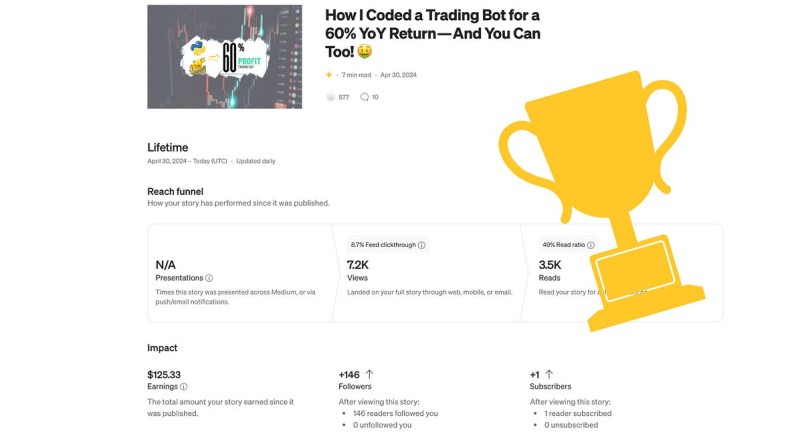
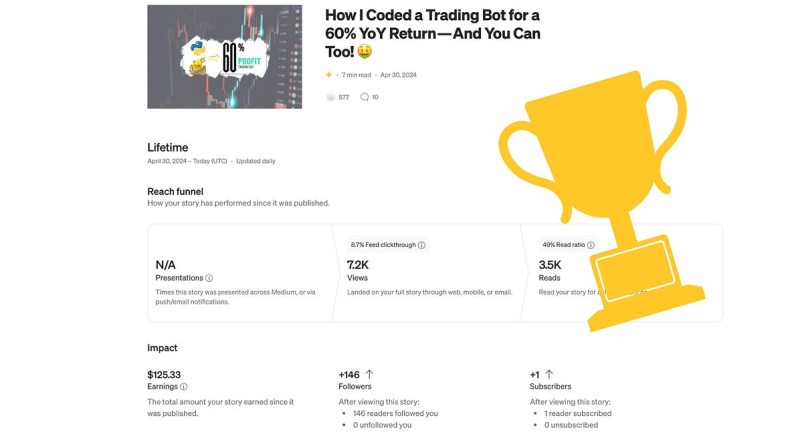
Reported returns in the sources include a 7% one-day gain, up to 30% in one day in a 3Commas example, 35% over 15 days in an ADX-trigger example, 3,000% in a 3Commas archive post, approximately 487% gross in a TimescaleDB case, a 60% yearly EMA and Bollinger Bands backtest alongside a 50% drawdown, 0.1% to 0.5% daily returns attributed to grid bots, 0.05% to 0.15% per completed market-making trade pair, 0.1% average profit per scalping trade, and 2.4% for an XRP protection-bot example compared with a 35% decline for passive holding. These figures come from different strategies, markets, periods, and risk assumptions. They are not directly comparable and do not establish what a new bot will earn.
The safest interpretation of the available material is that a crypto trading bot is a tool for implementing a defined strategy. Its behavior is determined by its configuration, data, implementation, exchange connection, capital management, and risk controls. Any live deployment should be based on the trader's own market view and the amount of capital they are prepared to lose.


Comments on “How to Choose Crypto Trading Bot Settings and Build a Profitable Setup”
No comments yet. Be the first to share your thoughts.