- MSB status covers AML only, not trade fairness
- Some licences have no ongoing checks
- Unregulated exchanges still take user funds
- Price reporting can be false with no penalty
A Review of Crypto Exchanges: Why 'Regulated' Doesn't Mean Safe
19 September, 2026
0 comments
Review of Crypto Exchanges Without the Fluff
A review of crypto exchanges shows how these marketplaces really work and why "regulated" claims can mislead you. I keep seeing people trust big names just because they say they follow rules. The truth is messier and you should know who you trust before you move your money.
There are over 600 crypto exchanges out there. Some are old, some new, some safe-ish, some a mess. This write-up stays useful years from now because the core facts about how these places work do not change much.
When you look for the best platform for trading crypto you will see long lists of names. But most of those lists skip the part where the word "regulated" means very little. A site can be "registered" and still not watch its own trades.
What Crypto Exchanges Actually Are
Crypto exchanges are digital spots where you buy, sell, and trade coins like Bitcoin and Ethereum. They are marketplaces, not banks, even when they act like one. Some hold your coins for you, some let you keep them yourself.
There are two main types. Centralized exchanges (CEXs) run like a company and keep control of your funds. Decentralized exchanges (DEXs) run on blockchain with no middleman and you hold your own coins. The split matters because the risk sits in different places.
The first crypto exchange was Mt. Gox, launched in 2010 by Jed McCaleb. It later went to Mark Karpelès and handled over 70% of all BTC trades worldwide before it collapsed in 2014 after a huge hack. BitcoinMarket.com also started in 2010 as the first independent exchange for BTC and fiat.
Big Names and How They Started
Coinbase began in 2012 by Brian Armstrong and Fred Ehrsam. They built for easy use and security. Kraken started in 2011 by Jesse Powell, with focus on safety and following rules. Binance began in Hong Kong in the summer of 2017 by Changpeng Zhao, then moved around the world after China banned bitcoin exchanges.
Early founders got laughed at. People called crypto a "crypto plaything" doomed to fail. There was no law frame at all. The Mt. Gox hack in 2014 lost 850,000 BTC, about $460 million then, and killed the site. That told the world security had to be real.
Zero legal or regulatory framework existed in the early days, and the public viewed crypto with skepticism due to Silk Road, Mt. Gox, and hacks.
Indonesia is now a big adopter of crypto and hosts 30 registered centralized exchanges. That shows how wide this has spread, far past the early US and EU users.
Why "Regulated" Does Not Mean Safe
A review of crypto exchanges from March 2021 looked at 16 top platforms. Only four had real trading rules. The rest had thin or no oversight. That is the hole most users fall into.
Seven of those 16 were Money Service Businesses (MSBs). That means they register for anti-money laundering (AML) checks, not trade rules. Coinbase is one of these. Being an MSB does not mean your trades are watched for fair play.
Three top exchanges had no oversight at all: Bittrex, Luno, and Bitfinex. Bitfinex was hacked in 2016 for about $72 million in bitcoin. A CFTC order could not make it do much. So "regulated" can be a sticker with no teeth.
The UK only regulates crypto for money laundering. A Gibraltar DLT licence sounds fancy but has little check after approval. Traditional stock venues must follow strict transparency and resilience rules. Crypto mostly does not.
What regulation claims can hide
Coinbase paid a $6.5 million CFTC settlement in 2021 for false reporting and wash trading on its GDAX platform. That shows even big names can break trade rules with little fallout. If you want the largest cryptocurrency exchanges you still must check what their tags really mean.
Kraken and Binance Up Close
Kraken is from 2011 and has a clean hack record. It keeps 95% of coins offline in cold wallets and does proof-of-reserves audits. It asks for KYC at three levels. In 2020 it got a Wyoming SPDI charter, the first US exchange to do so.
But Kraken paid a $30 million SEC settlement in 2023 over its staking offers. It blocks users in some US states and many countries. So even a "good" exchange hits trouble with rules.
Binance has been rejected by many regulator bodies. Cayman Islands said it was not licensed there. Thailand filed a crime complaint. UK FCA blocked it from regulated work without consent. Japan and Singapore warned it. Malaysia listed it as unauthorised. CZ would not name a HQ, calling it "decentralized" while real servers and staff exist.
Binance is under investigation by US DOJ and IRS, and probed by CFTC over US residents.
If you search for the cheapest crypto exchange platform you may land on Binance for low fees. But low fee is not the same as low risk. The legal mess follows the user if things break.
Stablecoins Run the Show
Stablecoins are crypto's first big win. They are tied to the dollar and now settle most value on chain. About 70 to 80% of all on-chain value uses them. Roughly 99% of stablecoin value links to the US dollar.
Exchanges use stables for margin, collateral, and quote money. Binance pushed its own BUSD in late 2022 by moving user funds from USDC, USDP, and TUSD into BUSD. That shows an exchange can use its power to boost its own coin.
This raises fair trust questions. When an exchange issues its own stablecoin, it can mix user risk with its own gain. The float is around $160 billion and may grow. Visa, Stripe, PayPal, and MoneyGram now use stables too.
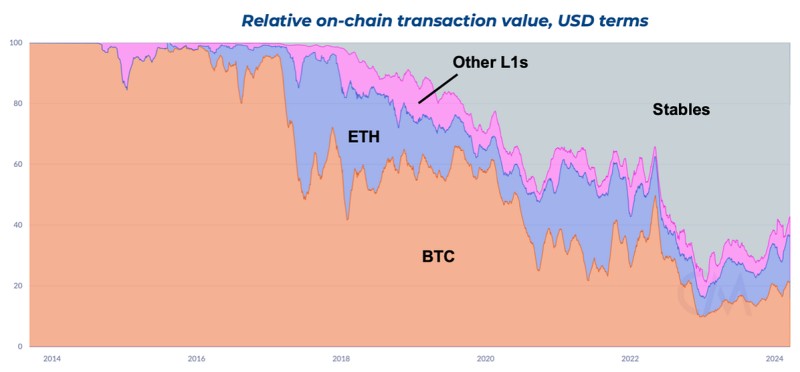
Some folks ask how do i turn my crypto into cash and the path often goes through stables first. You sell coin for USDC or BUSD, then cash out via the exchange rail. Fees and limits depend on the site and your region.
How a Centralized Exchange Works
The CEX blueprint has a trade engine that matches buy and sell orders. It uses blockchain nodes and wallets to hold user coins. That makes the exchange a custodian of your funds.
Order books list all open bids and asks. Trade feeds keep a history of done trades. Market data from outside providers feeds the engine for fair rates. Makers and liquidity providers keep the market steady.
Key parts of a CEX
- Trade engine matches orders
- Order books show open bids and asks
- Trade feeds record past trades
- Market data keeps price fair
- Security watches users and funds
Analytics spot weird trade patterns and help reports. Security covers onboarding, trading, and off-boarding with monitoring. If you want the best crypto trading websites you should check if these parts are clear and audited, not just fast.
Conflicts When Exchanges Do It All
Crypto platforms now act as full-service shops. They issue stables, hold deposits, lend, and sell risky items. This builds conflicts old stock markets do not have. The mix can make them too big to fail.
Celsius and Voyager crashed from mixing trade and lend. FTX fell from proprietary trading by Alameda Research. A split of trade from lend and own trading would help users and cut system risk.
The most reasonable separation of these activities would enhance investor protection while reducing systemic risks.
When an exchange also lends your coins, your funds back its bets. That is not a small print thing. It is the core of why a review of crypto exchanges must look past the front page.
Specific Exchange Profiles
Kraken holds about 3rd spot by some ranks, with $527 million 24-hour volume and 0.69% market share. Top pairs are USDT/EUR and XBT/USD. It has 227 coins and 655 pairs per CoinGecko. Fees are 0.16% maker or 0.26% taker for most trades.
Beginner instant buy costs 0.9% for stables and 1.5% for other coins. It gives futures, margin, OTC, NFT, and staking. Fiat ramps include USD, EUR, CAD, AUD, GBP, CHF. APIs work with bots.
Coinbase built for Main Street users and compliance. But the 2021 CFTC case and 2023 SEC action show cracks. It runs in over 100 countries. Mt. Gox is history now, dead from the 2014 hack. Garantex was taken down for illicit finance links.
If you are in the US and want crypto exchange apps in usa you will see Coinbase and Kraken often. Check state blocks before you sign up. New York and Washington block Kraken, for example.
Which Platform Fits You
Picking a site is not just about low fee. You must ask who holds the coins, who watches the trades, and what happens if it fails. A review of crypto exchanges should start there, not with a star rating.
Some users want the which platform is best for crypto trading answer in one line. There is no one best. If you need strict KYC and clean audits, Kraken fits. If you want many coins and low fee, Binance draws you, but legal risk rides along.
Questions to ask any exchange
- Is it licensed for trading or only AML?
- Does it prove reserves with real audit?
- Who holds the keys to my coins?
- What country can I sue in if it fails?
TokoCrypto is one of the registered spots in Indonesia and part of the wider Binance network. When people ask about tokocrypto exchange they often mean the local arm withBinance backend. Same risks travel through the link.
Notable Failures and Hacks
Mt. Gox lost 850,000 BTC in 2014. Bitfinex lost $72 million in 2016. These forced newer sites to use multi-sig and cold storage. The EU later pulled exchanges into AML law after such events.
FTX is the big one. Sam Bankman-Fried was convicted after Alameda's proprietary trading broke the firm. Celsius and Voyager showed lend plus trade is a bad mix. Coinbase's wash trade case shows even top sites can lie on data.
Regulated entities relying on prices from exchanges for accounting or futures contracts put themselves at risk due to lack of trading oversight.
If a bank or fund uses these prices, your pension could ride on unverified numbers. That is the quiet danger of weak exchange rules.
International Spread and Rules
Coinbase expanded to over 100 countries with local tweaks. Binance used a "decentralized" stance with regional hubs. Kraken grew futures and OTC. Gemini pushed insured custody. Crypto.com moved to DeFi and NFT.
The EU made MiCA to rule crypto service providers, including exchanges. IOSCO launched a roadmap for crypto and DeFi. These are steps, but many sites still slip through gaps by hopping borders.
The mess reminds some of 2008. Then G20 forced rules on derivatives and clearing. Crypto needs the same before a crash hits wider finance. Until exchanges face the same oversight as stock venues, users carry the load.
The okx trading platform review you read online should note where OKX is licensed and what it proves. Every platform hides its weak spot in a different jurisdiction. You have to dig.
Security You Can Check
Kraken stores 95% of crypto offline, does third-party proof-of-reserves, encrypts data, runs a bug bounty, and forces 2FA. Those are the marks of a site that treats safety as core, not add-on.
Cold wallets beat hot ones for hold. Multi-sig stops one key from moving all funds. Proof-of-reserves lets you see if the site holds what it owes. If a site will not show that, walk away.
Signs of real exchange security
- Cold storage for most coins
- Independent reserve audits
- Bug bounty and 2FA
- Clear withdrawal confirm steps
No exchange is hack-proof. But the gap between Kraken's record and Mt. Gox's fall shows process matters more than promises. A review of crypto exchanges should weigh this above color and ads.
What "Regulated" Looked Like in the Data
In the 16-exchange review, itBit was under New York DFS as a bank. eToroX and LMAX ran as multilateral systems under FX rules, not crypto rules. Currency.com in Belarus had broad controls but is not a top center.
That patchwork means one "regulated" tag in one country says nothing about another. A site can be clean in one spot and banned next door. Users skip this part at their cost.
Registration may give investors comfort, but regulator focus is generally on anti-money laundering and due diligence, not trading.
So when a site brags its licence, ask what the licence covers. If it is just AML, your trade can still be washed or fixed. The word alone is not a shield.
User Risk and Trust
The only real question in a review of crypto exchanges is who you trust with your coins. The name on the app is not the risk. The custody, the licence scope, and the audit are.
If you leave coins on a CEX, you trust its wallet and its books. If you use a DEX, you trust your own key care. Both need care, but the failure path is different.
Stablecoin use makes exit easy but ties you to the issuer. When Binance moved users to BUSD, those users took on Binance's stable risk without a vote. That is the kind of move a review must flag.
Trust checks before you deposit
- Read the licence scope, not just the badge
- Check reserve proof and auditor name
- See if lend and trade are mixed
- Know your country's legal reach
People ask can you buy crypto with chase and the answer is often via an exchange that takes bank wire or card. The bank does not watch the trade once the coin leaves. Your risk starts at the exchange door.



Comments on “A Review of Crypto Exchanges: Why 'Regulated' Doesn't Mean Safe”
No comments yet. Be the first to share your thoughts.