
- Is this social media post acceptable?
- What will happen to the price of stock X?
- Is the account messaging me actually Elon Musk?
- Is this work submission acceptable?
- Is this dapp a scam?
- Is this address actually the token?
How AI and Crypto Intersect: From Security Risks to Real Uses
15 September, 2026
0 comments

AI and Crypto: Where They Meet - and Why
I keep seeing folks get lost in the noise around ai and crypto. They hear buzz words and assume it's all hype or all scam. The truth is simpler and a bit messier. These two tech waves have run side by side for years, and now they cross paths in ways that matter for your money and your safety.
The short version: ai and crypto are not the same thing, but they keep bumping into each other. Crypto is built on cryptography, which is just math that proves who you are and keeps records straight. AI is software that learns from big piles of data and can write, sort, and find patterns fast. When you put them together, you get some real use cases and some real headaches.
If you're just starting out and wondering how to start with crypto , the meet-up of these two fields is worth a look before you send a single cent. It changes what a wallet can do and what a scam can look like.
How AI and Crypto Intersect: From Security Risks to Real Uses
The past decade gave us two big software trends: artificial intelligence and cryptocurrency. On the surface, they seem like opposites. Crypto is about open records and no central boss. AI is often closed and run by big firms. But the last few years changed that. Modern language models got strong, and crypto scaling tools like zero-knowledge proofs and secure compute got better.
Now the lines blur. Crypto is good at storing and tracking data. AI needs data and lots of compute. Together they can build new patterns for identity and value transfer. That sounds fine until you see the rough edges.
One clear use is in prediction markets and bots that trade on decentralized exchanges. Another is wallets that use AI to warn you about bad sites. But each win comes with a new way to lose if you're not careful.
The Basic Idea Behind Crypto and AI
Crypto's core is in the name: cryptography enables identity. The old web was built on logins from Google or Facebook and ads. Generative AI is not big data in the old sense. It's dense models trained on huge compute and structured sets, then squeezed into a file of weights.
A good example: Stable Diffusion took about 100,000 gigabytes of images and compressed them into a 2 gigabyte file. That file powered four of the top ten App Store apps in a December not long ago. It runs on a phone. That kind of compression lets AI sit next to identity and payment rails.
For someone asking what the best cryptocurrency might be, the answer shifts once AI tools sit inside wallets and markets. The tech under the coin matters more than the logo.
Cryptography, Encryption, and What AI Does to Security
Bruce Schneier is a tech writer I trust on this stuff. Back in June 2010 he wrote that crypto alone can't fix most network problems. He'd been saying it since 2000. His point: crypto is math, but security is about people and buggy machines.
He noted that adding one bit to a key adds a little work for the defender but doubles the attacker's work. Double the key length and the defender does about twice the work, but the attacker's load grows fast. For years that imbalance helped the good side.
But computer security is a fast arms race. New bug, new patch, new bug. The balance can flip overnight. Crypto is still needed, but it is not enough on its own.
Cryptography is a branch of mathematics. And like all mathematics, it involves numbers, equations, and logic. Security, real security that you or I might find useful in our lives, involves people.
Schneier also wrote in 2016 that math has no agency. It can't secure anything by itself. For crypto to work, it must be written in software, run on hardware, and used by people. Each step adds holes.
AI Changes the Cybersecurity Game
Here's the part that worries me. AI is not making crypto stronger, but it is changing cybersecurity. AI can find software bugs and write exploit code at a superhuman pace. A similar skill to write patches is likely coming.
That means a new arms race in what Schneier calls instant software. It is not clear who wins. One reader comment stuck with me: AI doesn't need to break OAuth tokens, it just needs to know how to steal them.
Another commenter said crypto is a needed layer, but defending modern networks is about integration, visibility, and resilience across the full system. AI makes that faster and more unforgiving. Pay attention to this part, it's the heart of the risk.
Why Open Wallets With AI Can Bite You
Vitalik Buterin, who started Ethereum, wrote a post sorting ai and crypto into four groups. The first is AI as a player in a game. This is the most ready use. Bots already do arbitrage on decentralized exchanges. Newer demos put AIs in prediction markets.
MetaMask and Rabby wallets already use AI to flag malicious sites and show what a transaction will do. That helps stop scams. But there's a catch. If the wallet code is open source, bad actors can read it and craft scams that slip past the AI guard.
So when you read about what crypto scamming looks like now, know it can be tuned by AI to dodge the very tools meant to catch it. The open ecosystem helps because many AIs iterate, but each single AI is still blind in its own way.
AI as a Player in a Game
Buterin's top group is AI as a player. The incentives come from the protocol, with human input at the base. On-chain arbitrage bots have done this for nearly a decade. Modern MEV bots exploit each other for tiny gains.
Prediction markets are the fun part. They never took off because big players are irrational or experts won't show up without big money. Thin markets kill them. But AIs work for less than a dollar an hour and have wide knowledge.
If you add a small liquidity subsidy, humans yawn, but thousands of AIs swarm the question. They can judge if a post is okay, if a token is real, or if a dapp is a scam. This is info defense without a central boss. Blockchain scaling finally makes micro-payments viable on-chain.
Plain examples of AI-as-player tasks
AI as an Interface to the Game
The second group is AI as an interface. This is user-facing software that explains danger in plain words. MetaMask's scam detection is one case. Rabby shows the expected result of a transaction before you sign.
Rabby once showed what would happen if you traded all "BITCOIN" (an ERC20 meme coin) for ETH. A human might not catch the trap, but the sim showed the loss. AI could super-charge these tools with richer explanations.
Risk remains. If your assistant is inside an open-source wallet, the bad guys have it too. They can tune scams to not trip the defense. Pure AI interfaces are risky due to errors. AI that complements a normal interface is the sane path.
AI as the Rules of the Game
Third group: AI as the rules. This means a blockchain or DAO calls an AI for a decision, like an AI judge. Some political elites like this idea. But if the model is closed, you can't check it. If it's open, an attacker can download it and craft attacks offline.
Crypto overhead is heavy. A normal Ethereum block verifies in a few hundred ms. A SNARK proof can take hours. AI compute is pricey. But AI math is mostly matrix multiplies with small non-linear steps. Some proofs keep overhead low for the linear part.
Black-box attacks are scary. A 2016 paper showed adversarial examples move across models even with different training. So a DAO using AI at the core needs to hide the model, limit queries, and authenticate each one. Worldcoin uses iris scans with trusted hardware as a guard.
AI as the Objective of the Game
The fourth group is AI as the objective. Here a blockchain exists to build or maintain an AI. NEAR protocol treats this as core. The aim: trustworthy black-box AIs via blockchain and secure compute, with democratic say and a kill switch.
BitTensor pays for better AI without full crypto encryption. Buterin says the most promising near-term use is AIs as micro players. The hardest is a single trusted AI. He says tread carefully in high-value cases. I agree, don't bet the farm on it yet.
Enterprise AI Helpers in Crypto
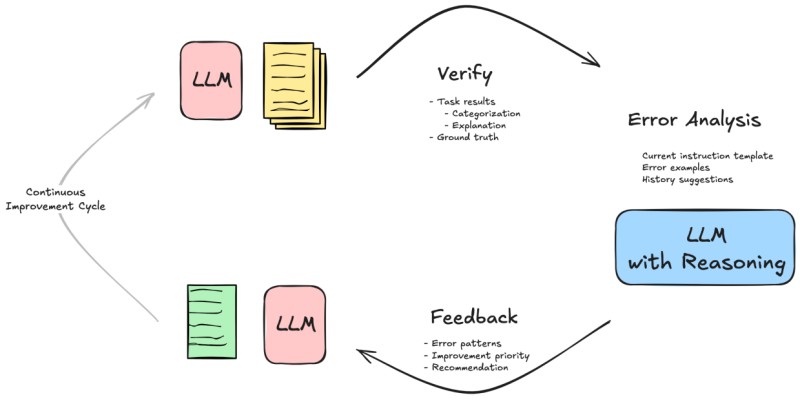
Crypto.com is a big exchange with users in many countries. They put a generative AI assistant on AWS to handle FAQs and actions. The system uses separate parts for routing, rules, and priority. Prompt engineering matters a lot.
They used feedback loops. If a customer says "I need to increase my credit limit immediately," the assistant might approve without checks. A critique step flags the miss, then the reply adds auth and alternatives. This lifted task accuracy from 60% to near perfect over time.
That's not crypto magic, it's careful prompt work. But it shows ai and crypto firms will keep using these assistants. If you want the best new crypto to buy , know that the help desk answering you may be a bot with guard rails.
Renting GPUs Like an AirBnB for Cards
AI workloads need lots of graphics cards. A market popped up to rent idle GPUs, like an AirBnB for graphics cards. Demand grew many times over after modern language models arrived. If every card could be used for AI, the shortage eases.
But tech issues remain. Not all cards fit all tasks. Training on scattered cards has higher delay than a tight cluster. And you can't trust a stranger's machine without checks. Reputation and staking help, or new models that verify fast.
Firms like Multicoin invested in Render Network, which started with 3D render and moved to AI inference. Others in this space include Akash, BitTensor, Gensyn, and Prodia. This is where ai and crypto meet hardware and money.
Token-Incentivized Learning From Humans
Token pay for human feedback (RLHF) won't fit every case. It makes sense when the model is narrow, not a general chat bot, and when humans outside the loop earn enough to care about locked tokens.
Useful fields: medicine, law, engineering, finance, science, education, and environment. Hivemapper already pays drivers and editors with tokens to train map AI. It's live, not a white paper dream.
If you're chasing crypto with highest potential , these token-learning setups are a small corner worth a peek. They tie real work to token reward without promising the moon.
Zero-Knowledge ML and On-Chain Compute
Blockchains don't know the real world. Oracles help some, but not enough. Sometimes data must be computed before chain use, like a yield tool picking the best pool. That's too costly on-chain, so zero-knowledge ML (zkML) steps in.
Teams like Modulus Labs and general zkVMs such as Risc Zero work here. Matrix multiplies in AI have low proof overhead; the non-linear parts are heavier but getting better. This lets some AI logic touch chain data without dumping it all public.
Deep Fakes and Proving What's Real
As deep fakes get good, authenticity matters. One fix is public key crypto: creators sign their content and stake reputation. You need a public record mapping keys to real people for checks and punishment.
Blockchain can be that tamper-proof registry. Some phones sign photos to prove they're not AI-made. Photoshop and Stable Diffusion can tag the tools used. Crypto's base is identity, and this is identity for media.
If you plan to buy cryptocurrency using paypal , the same identity layer can help you trust the source of what you read and the app you download. It won't stop all lies, but it raises the cost of fakes.
Fraud Risks and Security Shifts
TRM Labs saw a large jump in AI-enabled scam activity over a past period. AI lifts the scale, speed, and tweak rate of fraud. Schneier's point on AI finding bugs applies here too: instant software means instant exploit.
In crypto, open wallet AI can be studied by attackers. Black-box attacks move across models. Physical patches can fool face AI. Prediction markets or stablecoins using a weak AI oracle could lose money in a blink.
This is why I say don't skip the boring security part. When people ask how to make money off crypto , the answer includes not losing it to a tuned scam. AI makes the old rip-offs faster and wider.
Watching the Policy Side
Some law firms note the nation is set to build AI and push its use, while government shows fresh interest in crypto as digital assets. Both can help prosperity but sit on complex tech that trips up policymakers.
The fields used to run apart. Now they converge. That means rules for one will brush the other. If you follow crypto coins to watch , watch the law too, since AI-crypto merge will draw more eyes from regulators.
GPU Rentals and the Verification Problem
Renting GPU time across the net sounds great until you can't prove the job ran right. The fix is reputation plus crypto-economic staking, or new math that verifies quick. Without that, you're trusting a stranger's box.
Training on high-delay networks needs new methods. Foundation models love low-latency clusters. Decentralized ones are slower by orders. Build for the lag and you can use the spare cards.
For the buyer hunting how to buy cheap crypto , none of this is direct, but cheap compute lowers the cost of the AI tools that now guard or hunt crypto users.
A Few Good Reads and Starters
If you want ground truth, some old texts still hold. Schneier's Applied Cryptography was on desks at Ft. Meade in the 1990s. Folks could read it but not cite it. It made academic crypto plain for non-math people.
For newcomers, a list like best books to learn about cryptocurrency should include clear intro texts, not just hype. Read the math basics before the price charts.
Where ai and crypto actually help today
- Wallets that simulate tx results and flag scam sites
- Prediction markets with many small AI players
- GPU rental markets that use tokens for trust
- zkML that proves compute without dumping data
- Content signing to fight deep fakes
What Stays True Over Time
The meet-up of ai and crypto is not a fad. Crypto gives identity and record. AI gives pattern and text skill. Together they can warn, trade, and verify, but they also open new attack paths that close fast.
Schneier's old line holds: crypto is needed, not sufficient. AI won't fix that. It just makes the race quicker. The human in the loop still matters, and so does plain caution with your keys and your clicks.
AI has demonstrated a superhuman ability to find vulnerabilities in software and to write exploits.
I'll keep watching this space. The uses are real, the risks are real, and the noise is loud. Stick to source-grounded facts and you'll do better than most.


Comments on “How AI and Crypto Intersect: From Security Risks to Real Uses”
No comments yet. Be the first to share your thoughts.